

Empowering TESOL Affiliates: Building Resilience and Collaboration
Evrim Üstünlüoğlu, TESOL Türkiye, İzmir, Türkiye
Brief Introduction about TESOL Türkiye
The purpose of this paper is to share one of our best practices as TESOL Türkiye, setting an example for other affiliates. We hope to inspire other associations to expand their networking with affiliates because we, as TESOL Türkiye, have already experienced the incredible outcomes that occur when we come together.
TESOL Türkiye was officially founded in June 2017 in Türkiye after having functioned as T-PLUS (Trainers’ Professional Learning and Unlimited Sharing) since 2012. TESOL Türkiye aspires to become an international association trusted for knowledge and expertise in English language teaching, teacher education, and in-service professional learning. It is a national association of ELT professionals committed to advancing the quality of English language teaching by contributing to the sustainable quality of teacher education and in-service professional learning in Türkiye through collaboration, open exchange of practice, research, standards, and advocacy. We are a passionate group of ELT professionals dedicated to improving our professional development by learning from each other (Figure 1).
Figure 1
We are TESOL Türkiye
What’s Our Project About?
In recent years, global climate change, pandemics, natural disasters, wars, and advances in technology have caused thousands of people to migrate, resulting in economic, social, and societal inequalities, with education being particularly affected. On the other hand, rapidly advancing artificial intelligence has brought about significant changes and inevitable innovations in various fields, including education and language teaching over the past year. All these challenges have highlighted the importance of “trauma” and “trauma-informed approaches” and the power of standing together. Thus, TESOL Türkiye decided to conduct a project on trauma-informed teaching.
What Do We Mean by Trauma and Trauma-Informed Teaching?
Trauma, in simple terms, can be understood as an emotional, psychological, or physical response to deeply distressing events that overwhelm an individual’s ability to cope. In educational contexts, traumatized students often struggle with regulating their emotions, building trust, and engaging in healthy social interactions. Their distress may appear through behaviors such as aggression, withdrawal, avoidance, or shutting down, which are sometimes misinterpreted by teachers as defiance or lack of motivation (Terrasi & de Galarce, 2017). Such misunderstandings can result in ineffective interventions, strained teacher-student relationships, and lost learning opportunities. This is why it is crucial for educators to develop an awareness of trauma and apply trauma-informed teaching practices. Trauma-informed approaches recognize how experiences such as natural disasters, loss, bullying, or war affect a student’s learning and behavior, and they adapt instruction accordingly. Central to this approach are key principles that create a supportive and inclusive classroom environment: safety, trustworthiness, peer support, collaboration, empowerment, student voice and choice, and cultural sensitivity. Research emphasizes that when these principles are intentionally embedded into teaching practice, they not only reduce the impact of trauma on students’ academic and social lives but also promote resilience, emotional well-being, and a stronger sense of belonging (Jennings, 2018; Minahan, 2019; Minahan & Rappaport, 2012).
What is Our Story About?
Our story began with our application to the Regional English Language Office (RELO) in 2024, emphasizing that we can heal together in this world full of challenges and difficulties. In January 2024, we were thrilled to receive a grant from RELO for our project titled “New Perspectives in the Face of Trauma-Induced Shifts and Technological Advancements.” This project aimed to create a shared space for international collaboration, allowing English language teachers to share best practices and support each other's professional growth, especially during challenging times.
Like many other associations, TESOL Türkiye aimed to build bridges with international teacher associations in this project. We reached out to neighboring TESOL associations, seeking mutual support during these tough times. We started sending emails to neighboring associations, inviting them to sign memorandums of understanding and share experiences to facilitate mutual learning. Some associations responded immediately, while others did not respond at all. However, we persevered, continuously visiting international associations' websites and sending follow-up emails to contacts until we received a response (Figure 2).
Figure 2
Teachers collaborating on projects
The positive responses from TESOL Ukraine, TESOL Spain, TESOL Greece, Nile TESOL Egypt, Kuwait TEFL, HUPE Croatia, NELTA Nepal, ELTA Serbia, CETE/TESOL Georgia, and BETA Bulgaria led to meaningful collaborations. Through webinars, we shared our concerns and experiences, providing a therapeutic outlet during crises like the war in Ukraine, earthquakes in Türkiye, and floods in Spain.
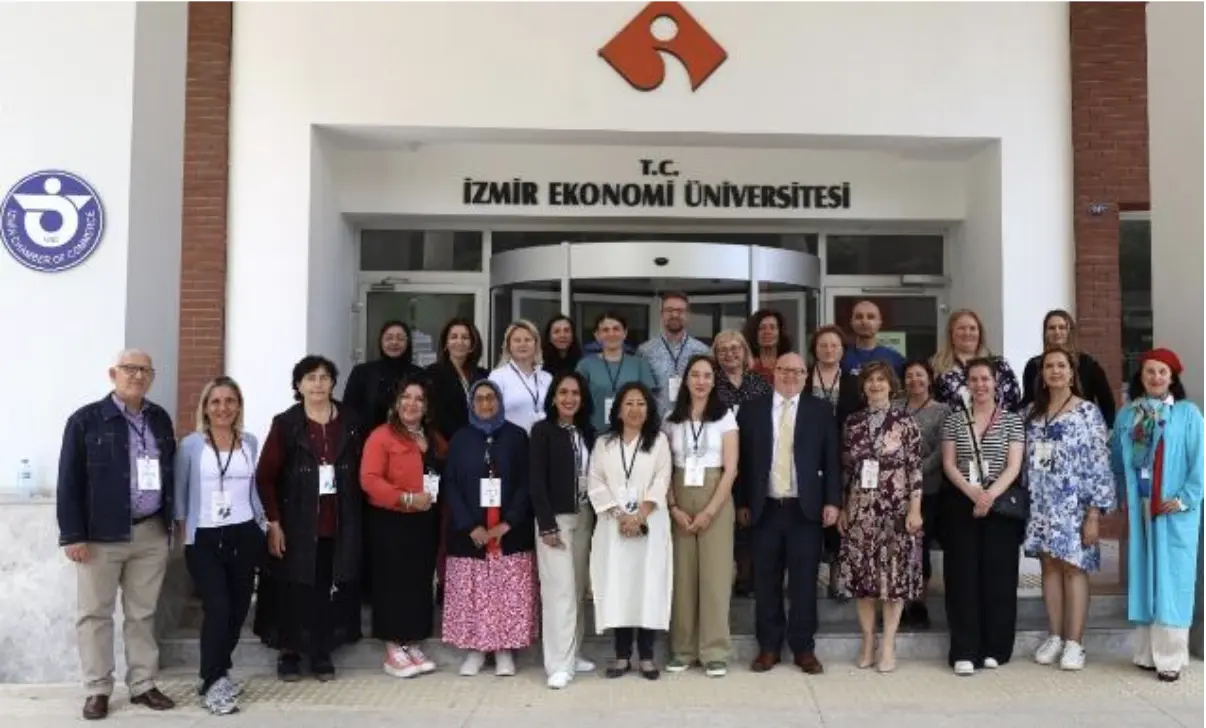
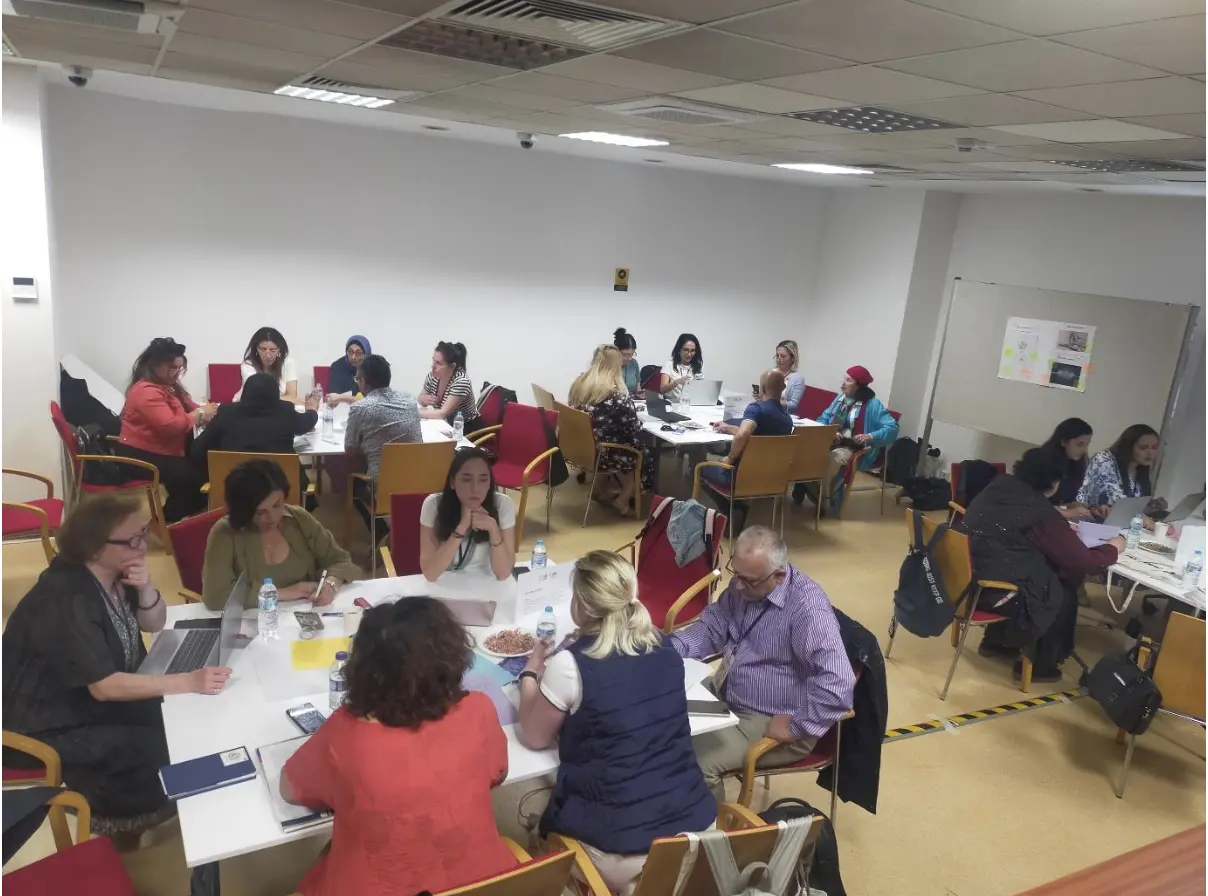
Further, these collaborations through webinars and online zoom meetings culminated in an online joint conference in April 2024, where around 300 participants discussed challenges such as disasters, mobility, refugees, and technological advancements from their geographical perspectives and realities. We discussed the impact of these challenges on teaching in our language classes. This was followed by the International TESOL Affiliates Summit in May 2024 in İzmir Türkiye, bringing together affiliates from various countries (See picture 1 and 2). The summit provided a platform for collaboration, helping us navigate the future of language teaching. It allowed us to update teachers on the latest ELT methodologies, enhance pedagogical skills, and equip them to meet diverse learner needs. Most importantly, it fostered safety, trust, and resilience through trauma-informed practices. The summit produced a handbook, “Trauma-Informed Teaching: Crafting Safe and Supportive Environments for Students,” summarizing the experiences and insights shared by affiliates from Bulgaria, Egypt, Georgia, Greece, Kuwait, Nepal, Serbia, Spain, and Ukraine. You can access the e-book via Link to the handbook.
Moving Forward with Trauma-Informed Practice
The project has clearly demonstrated that trauma-informed teaching is not just a local concern but a global necessity. One of the most important lessons we gained is that collaboration heals, empowers, and sustains. In our experience, international teacher associations played a vital role in this process by not only fostering professional development but also offering a strong sense of solidarity and emotional support during times of crisis. Shared platforms such as webinars, online conferences, and the İzmir summit became meaningful spaces where educators could exchange strategies, share personal experiences, and collectively build resilience. These collaborative efforts highlighted the power of professional communities to create hope and practical solutions in the face of global challenges.
Another significant outcome of the project was the emphasis on practical implications, both at the policy and classroom levels. At the policy level, our summit discussions and jointly produced handbook underscored the importance of schools adopting trauma-informed policies, mandating regular professional training, and establishing strong partnerships with families and communities to extend support beyond the classroom walls. It became evident that systematic change and sustainability in this area cannot happen without effective school leadership. School leaders, as key drivers of educational culture, play a central role in ensuring that trauma-informed approaches are successfully developed, maintained, and scaled across institutions.
At the classroom level, teachers can integrate many trauma-informed practices into their daily routines. For example, they can create safe and secure spaces by warmly greeting students by name and setting clear, predictable expectations. They can build trust and relationships by being consistent and fair, offering choices, and encouraging cooperative learning. Teachers can also promote student voice by allowing learners to set their own goals or choose project topics, thereby giving them a sense of agency and control. Minimizing potential triggers, such as loud noises or unexpected physical contact, helps reduce stress, while fostering resilience through positive feedback, empathy, and a strength-based approach helps students regain confidence. Simple yet effective strategies, such as using a feelings board for non-verbal expression, incorporating short movement breaks to relieve tension, or ending the day with reflection and gratitude, can also nurture well-being for both students and teachers.
In conclusion, the project has shown us the transformative impact of working together to understand trauma and apply trauma-informed approaches. We are deeply encouraged by the fact that through sharing our stories, listening with empathy, and supporting one another, we have learned to heal collectively. This journey has strengthened our belief that together we are not only better and stronger, but also more capable of shaping resilient classrooms. Ultimately, we are building a collaborative future for English language teaching—one rooted in compassion, inclusivity, and shared humanity.
References
Jennings, P. A. (2018). The Trauma-Sensitive Classroom: Building resilience with compassionate teaching. New York: W.W. Norton & Company.
Minahan, J., & Rappaport, N. (2012). The behavior code: A practical guide to understanding and teaching the most challenging students. Harvard Education Press.
Minahan, J. (2019). Building positive relationships with students struggling with mental health. Phi Delta Kappan. 100, 56-59.
Terrasi, S., & de Galarce, P. C. (2017). Trauma and learning in America's classrooms. Phi Delta Kappan, 98(6), 35–41.
 Prof. Dr. Evrim Ustunluoglu has a vast amount of experience as an instructor, advisor to the rector, the dean of students, and also the director of School of Foreign Languages. Her qualifications include MA in Teaching English as a Foreign Language and Ph.D. in Educational Sciences. She has publications in international journals and has been awarded scholarships as a researcher and visiting scholar abroad. Her expertise and interests are quality, program development, methodology and design thinking. She served as TESOL Türkiye president in 2023-2024.