

What Makes Us Tick! Beta And the Leadership Mission!
Albena Stefanova, Lina Yanbastieva-Petrova, Veselin Chantov, Georgi Dimitrov, BETA, Bulgaria
Being part of the TESOL professional network is both a challenge and a responsibility. At BETA, we believe it is a strategic priority to develop inclusive leadership pathways, enhance member engagement and foster a culture of equity and transparency, something which has yielded meaningful impact among our members and partners from similar associations abroad.
We have learned that leadership is not just about titles – it’s about consistency and trust.
Building a team, not just a committee. Therefore, throughout the years of BETA existence, we have been working on building teams including experienced and new committee members that complement one another in the committee mission to interweave traditions and novelties, and to create synergistic effects to expand and enhance along the way, which helps build stronger and more inclusive organisations.
Transparency and Trust
One of our key challenges in past years has been maintaining active member engagement between major events like annual conferences. Feedback from our members consistently pointed to the need for more transparency, better communication, and regular opportunities for meaningful involvement.
Examples include:
-
Participation in international networks: Through collaboration with STEP Azerbaijan, TESOL-Ukraine, and ELTA Serbia, BETA members now have access to the International Classroom Coffee series – an inspiring online initiative held every other Wednesday. These events feature guest speakers and provide a forum for teachers to communicate, share expertise, and grow professionally across borders.
-
Professional development through SOL: Thanks to our cooperation with SOL (Sharing One Language), more BETA members have had the opportunity to attend international training courses, gaining valuable experience and fresh perspectives (Figure 1).
-
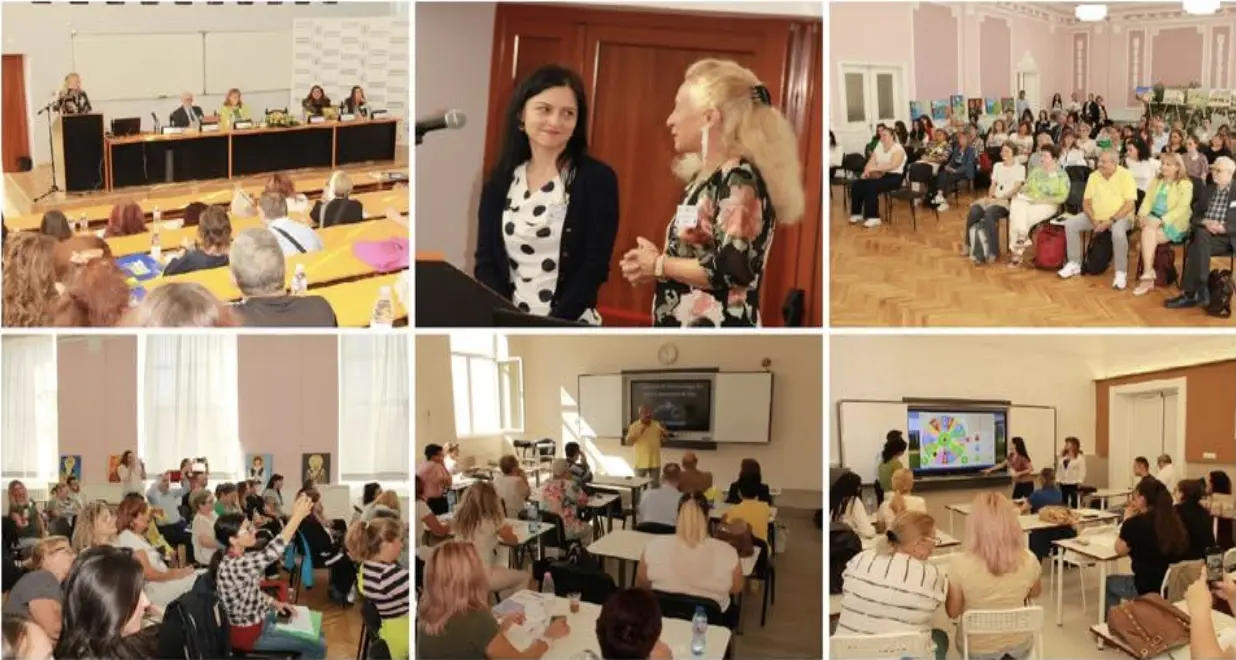
Promoting belonging: “HAPPY DAY” campaigns are held three times a year on culturally significant Bulgarian holidays, during which Bulgarian ELT professionals can join BETA or renew their BETA membership at half price. These campaigns are promoted through a multi-channel outreach strategy including emails, social media, and communication with regional education departments – successfully revitalising our membership base and reinforcing the value of community and professional growth. BETA members also have the opportunity to represent the association at conferences and events organised by our partner associations (Figure 2).
-
New member-focused initiatives: This year, BETA introduced a new rubric encouraging members to share classroom activities. Using a template shared via Google Slides, members can submit student-centered ideas to be featured in the BETA newsletter. This provides visibility while encouraging professional sharing and empowerment. We have also contributed articles to publications of our partner organisations, which enhances BETA’s authority, promotes our work, leads to participation in new initiatives, and strengthens our appeal as a partner for professional development and collaboration in organising joint events such as congresses, webinars, and more.
- Calls for participation: Members are regularly invited to contribute to the BETA e-Newsletter and propose sessions for upcoming national and international events. The e-Newsletter is published twice a year online, plus a special issue in the form of conference proceedings is devoted to papers presented at BETA Annual International Conference. As of late, the release of the three issues per year has corresponded quite closely to teachers’ holidays (winter and spring), which allows the reader to spend more time reading the latest issue. The e-Newsletter is open to considering different types of contributions, including but not limited to short articles, sharing of good, innovative and creative practices, and poetry. A new issue is typically characterised by a new front- and back cover design as well as a variety of styles regarding the organisation of the pages. Apart from enjoying colleagues’ contributions, readers can find information about forthcoming ELT events.
As a result of these initiatives, members no longer feel like passive recipients of decisions, but rather collaborators in shaping our direction. Since COVID, attendance in our forums has grown steadily, and more members are stepping forward to initiate their own ideas, interest groups and projects.
Figure 1
BETA members at this year’s SOL training – learning, sharing, and growing together
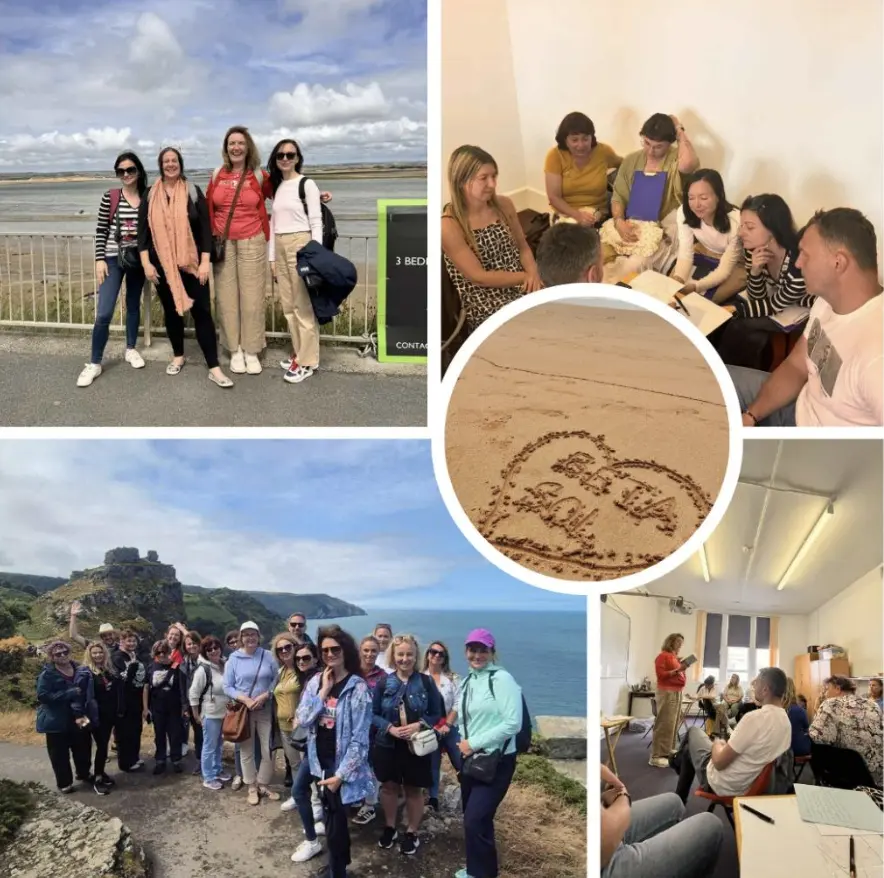
Figure 2
BETA’s international events – uniting educators from Bulgaria and beyond
Lessons and Next Steps
-
Nurturing leadership – creating opportunities and mentorship helps people grow into larger roles.
-
Engagement policy – making our operations visible and accessible to members: through functional and revamped website, open meetings, virtual formats, competitions, journal contribution, invitations for participation in conferences, sponsoring such participation – builds trust and involvement as well as a sense of belonging.
-
Equity as a practice, not a checkbox – continual self-assessment, action and willingness to be accountable.
- Fostering cross-border collaboration. We are exploring partnerships with TESOL associations in neighbouring regions particularly in the areas of implementing AI into ELT, digital literacy, ethical use of technology, sharing common goals. BETA has been actively keen on sending representatives to partner associations in an attempt to foster networking, sharing and exchange of good practices, opportunities for collaboration and mutual benefit. These have resulted in an increase of membership numbers and an avid interest in representing the association abroad. We are actively involved in working with partners from IATEFL Poland, TESOL Macedonia-Thrace from Greece, TESOL Turkiye, ELTA – Serbia, LAKMA Lithuania, and HUPE Croatia.
What Makes Us Tick!
We hope our journey will encourage others to reflect on their own practices and continue developing their leadership models and member engagement strategies that are transparent, inclusive and collaborative.
 Albena Stefanova is an Associate Professor at the University of National and World Economy in Sofia, Bulgaria. She teaches English for specific purposes to students of economics and political studies. Her main interest is ESP, particularly functional communicative competence and specialised translation.
 Georgi Dimitrov is a senior lecturer at the University of National and World Economy in Sofia, Bulgaria. He teaches English for Specific purposes to students of political studies and economics. His research interests are in the fields of ESP, phonetics, and historical linguistics.
 Veselin Chantov is an Associate Professor at the University of Library Studies and Information Technologies in Sofia, Bulgaria. He teaches General English and English for IT specialists. His interests are in the field of foreign language teaching and management in education, as well as in lifelong learning, formal and informal education.
 Lina Yanbastieva-Petrova is a head teacher of English as a foreign language at Yoan Ekzarh Balgarski Secondary School, Shumen, Bulgaria, and a PhD candidate at the Department of English Studies at Shumen University. Her main professional and research interests are in the realm of integrating modern technologies and PBL principles in ELT.