
Letter from the Chair
Miriam Moore, University of North Georgia, Gainesville, Georgia, USA
Dear Colleagues in Applied Linguistics,
I am delighted to begin my tenure as Chair of the Applied Linguistics Interest Section, and I do so with thanks to Past Chairs Rashad Ahmed (2023–2024) and Muhammad Alasmari (2024–2025) for their service to TESOL and ALIS. We are entering this year with a dynamic leadership team:
- Andreea Cervatiuc, Chair-elect
- Muhammad Alasmari, Past chair
- Andy Jiahao Liu and Curtis Green-Eneix, Newsletter Editors
- Linda Merzougui and Fatemah Bordbarjavidi, Social Media Coordinators
- Dan Zhou and Nabiha El-Khatib, Events Coordinators
- Kaitlyn Forster, Community Manager
- Mimi Li, Member-at-Large
I was able to meet with our board liaison, Cynthia Wiseman, and several members at the just-concluded TESOL 2025 Convention in Long Beach. They shared ideas for our group going forward, including hosting virtual coffee chats and webinars, as well as expanding our social media presence and our resources on MyTESOL. Our leadership team will be meeting in the next few weeks to finalize our goals for the coming year and map a strategy for making those goals a reality.
Our strategy will certainly build on the energy and urgency we sensed as we gathered in California in March. We need the strong, clear voices of TESOL professionals, particularly those with expertise in applied linguistics, as we move through turbulent changes in technology and politics over the next few years. We heard many such voices during our conference; we hope to expand opportunities for our ALIS colleagues like you to join the conversation in 2025.
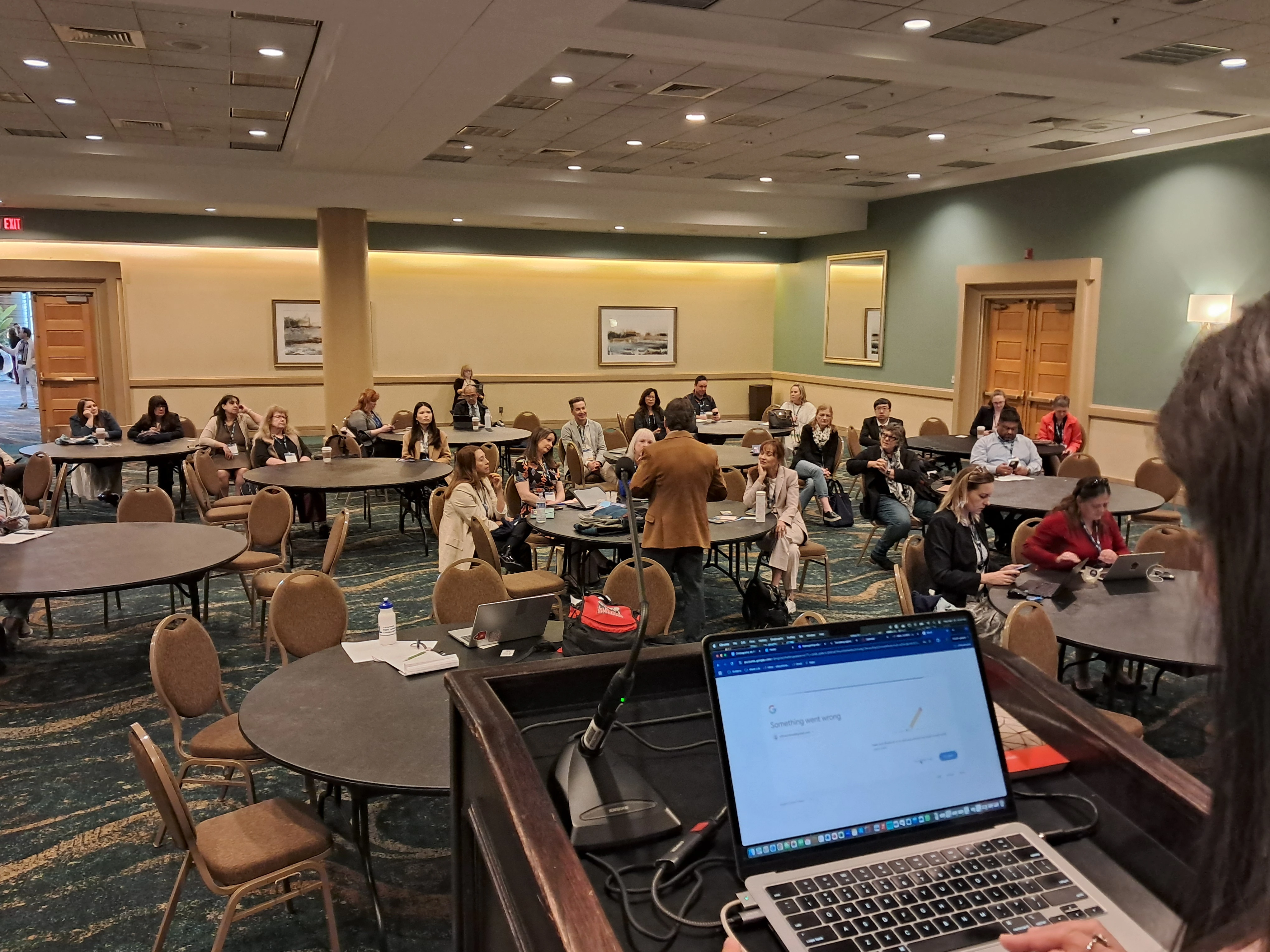
Our academic session in Long Beach, entitled “Scaffolding: Theorizing, Researching, and Implementing Linguistic and Metacognitive Support,” featured a stellar panel. Leah Cormona showed us how she uses AI to scaffold reading assignments, and then Dr. Andrés Ramírez turned to theoretical conceptions of scaffolding as he introduced “Genre-Based Pedagogical Translanguaging.” Finally, Dr. Yilin Sun, a former TESOL President, looked at strategies for scaffolding instruction with adult learners.
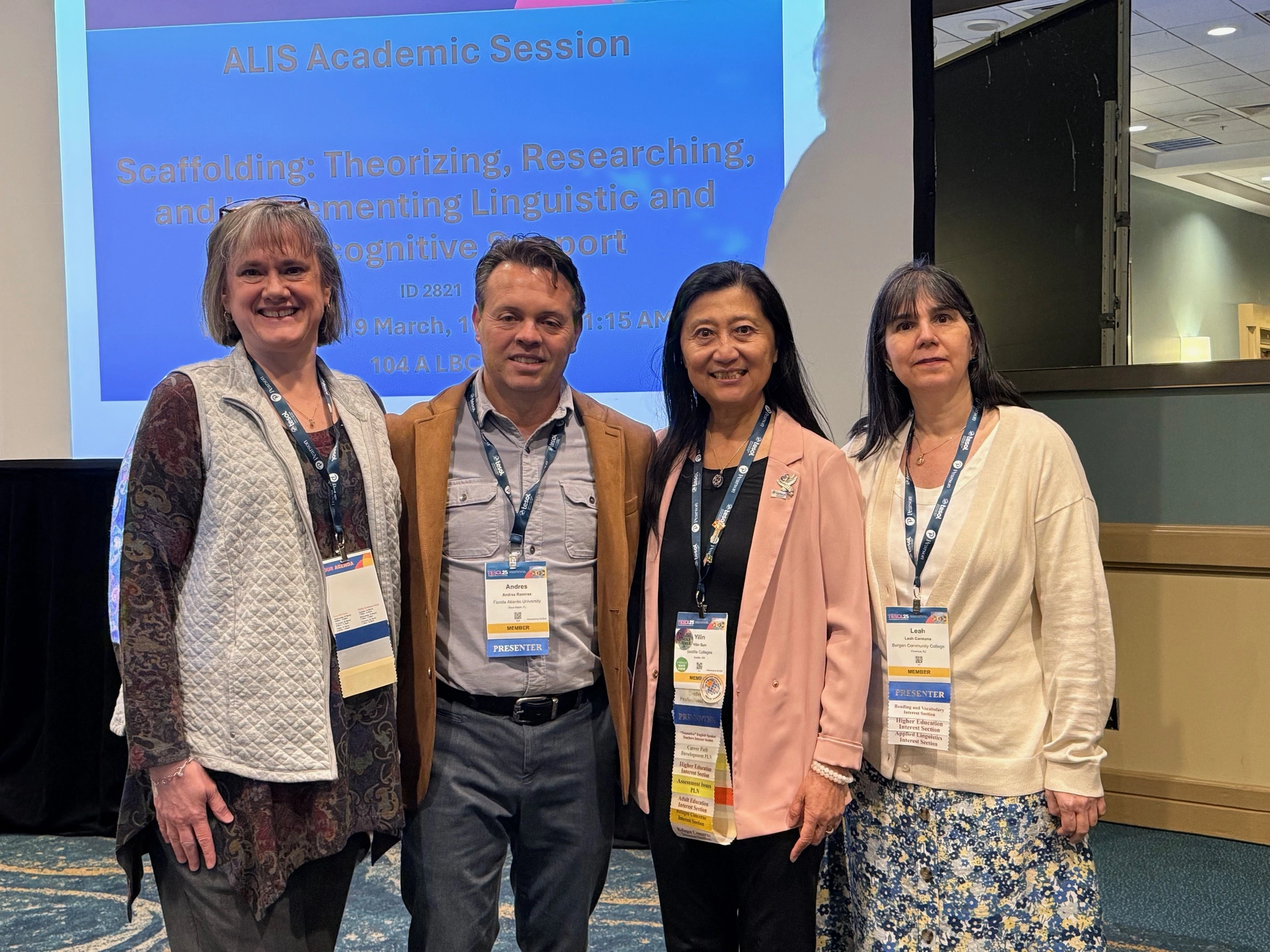
We also hosted an Intersection Session with the Speech, Pronunciation, and Listening Interest Section. Our panel, “Exploring Effective Feedback for Oral Skills,” featured Dr. Reza Dalman, who presented a meta-analysis concerning corrective feedback and pronunciation development, and Dr. Suzanne Franks and Eva Miszoglad, who outlined strategies they use to develop oral skills at the University of Illinois Urbana-Champaign. I was privileged to speak on this panel as well, addressing strategies for helping pre-service teachers develop feedback literacy.
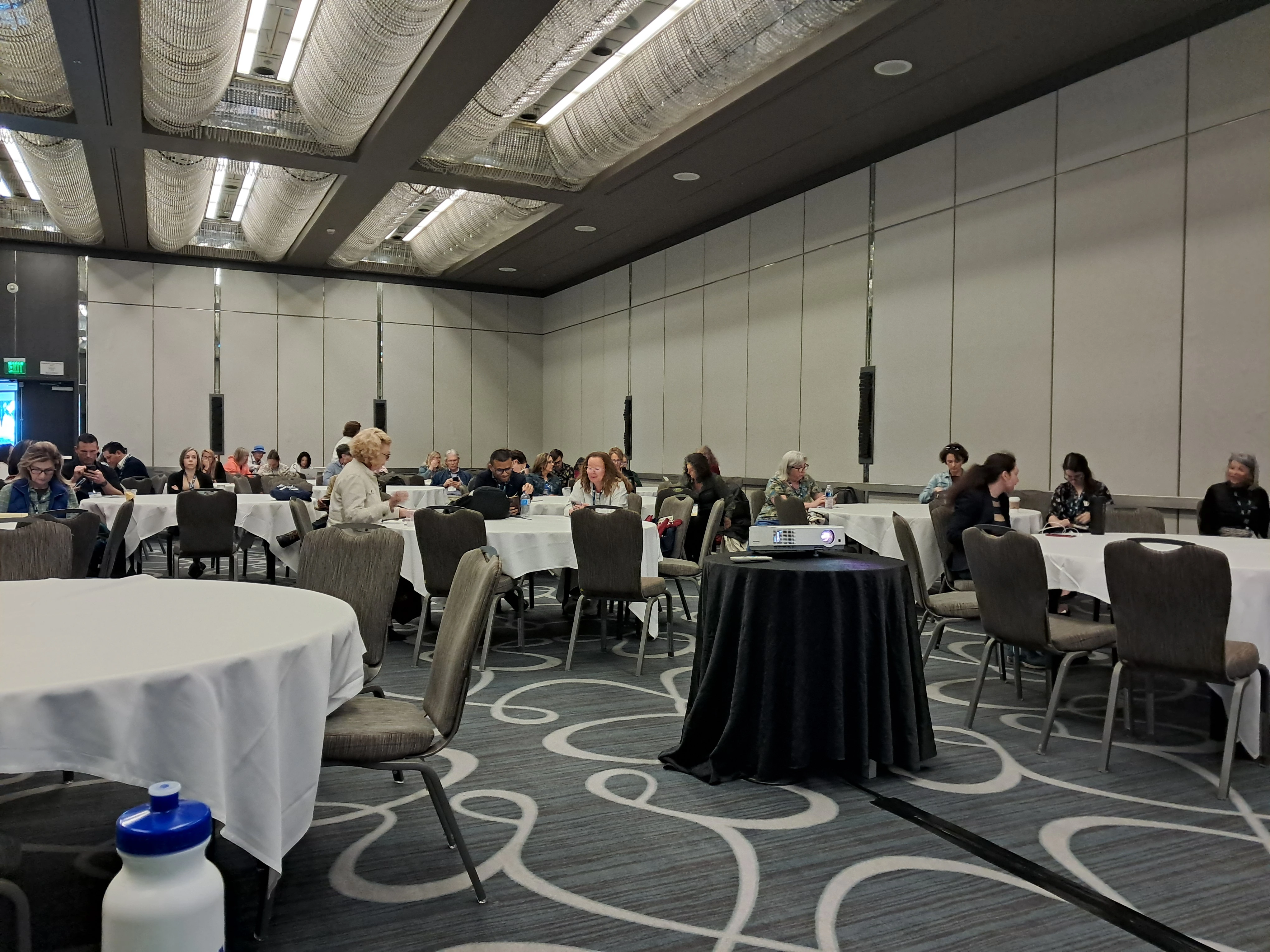
Again, I thank all of those who are serving in the Applied Linguistics Interest Section, and those who participated in TESOL 2025, Long Beach. I look forward to reading the work of our members in this issue of the newsletter, and to collaborating with our leadership team in the coming year.
Sincerely,
Miriam Moore
Chair
 Miriam Moore is an Associate Professor of English at the University of North Georgia in Gainesville, Georgia, where she teaches undergraduate courses in writing, linguistics, and ESOL pedagogy. Her research interests include multilingual writing across the curriculum, metalinguistic awareness, online pedagogy, and written feedback.