
Taiwan Is Better Than Your Corner of the World
Dr. Roger W. Anderson, Monterey, California, USA
As an ITA Educator, I often had ITA students from Taiwan in my classes, including some who voluntarily participated in my dissertation research. I remain forever grateful to them!
I finally found the time and stability to explore Taiwanese culture and language. Specifically, I took a recent, short trip to Taiwan, and am in the midst of my second year of online Mandarin study through community-based, adult education classes. In this article, I share five highlights from these activities that surprised me about Taiwan. First, I explain the value for the ITA Educator of knowing this type of factoids about Taiwan, and about all locations from which our ITAs come.
Native Language Teachers: Guard Against Your Biases!
Our ways are normal, efficient. Their ways are mysterious.
Our language is logical and precise. Their language is full of exceptions and caveats.
Our classroom reflects scientific discoveries. Their classrooms reflect antiquated practices.
We practice democracy. They practice something else.
Such egocentric thinking is innate to the human condition, I presume. Admittedly, discussing such haughty feelings does not make for polite conversations amongst international educators. Yet intellectual honesty has been identified as a virtue of Western society since Antiquity. Schall S.J. (2009) described Aristotle’s view of truthfulness (book four of “Ethics”) as “a medium somewhere between boasting and self-deprecation… it means that we speak the truth about ourselves”.
Language teachers, especially those teaching their native language, must be mindful of such pitfalls. If they adopt such thinking-- consciously or unconsciously-- it will become impossible to not see their second language learners in ways that center on their deficiency or otherness rather than their strengths and emergent bilingualism.
During my time teaching ITAs, I already was multilingual and possessed advanced degrees. However, I lacked the depth of appreciation for Taiwan and East Asian countries from which ITAs came. This resulted not from my disinterest, but from the limitations that life imposes on us all: being granted only 24 hours per day.
Five Surprises in Taiwan
My goal in sharing some of the pleasures and adventures I enjoyed with ITA Educators --who have not yet visited Taiwan—is to help them understand the environment from which their Taiwanese ITAs come from. What follows is not an extensive, sociological dive into Taiwanese society, but rather observations from a fellow language teaching professional.
A Green Island
The southern portion of Taiwan is located south of the Tropic of Cancer, meaning that it is, by definition, a tropical environment. Subsequently, the heat and humidity in early fall was impressively high. Thus, Taiwan’s lush green mountains, combined with the blueness of the ocean, are an impressionist painter’s dream. National parks and forests are found throughout Taiwan, and troops of monkeys roam certain forests, even those located adjacent to luxury hotels. (See Image 1). Taiwanese butterflies are exquisite, but not photogenic. Sorry, no photo available.
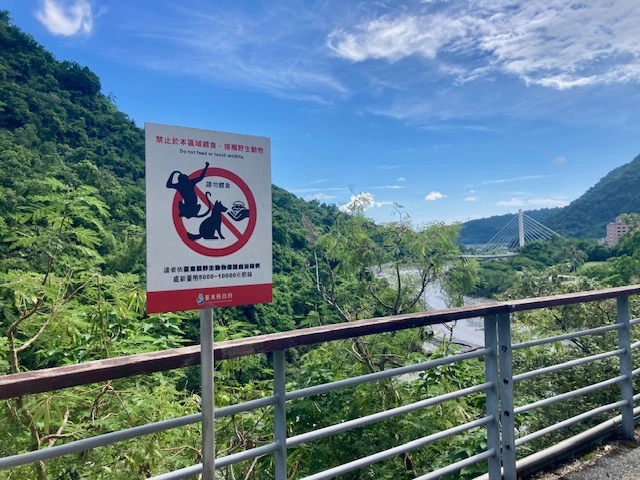
Image 1. Don’t feed wild monkeys
Related, Taiwan maintains several smaller islands, a few of which are located only miles from mainland China. Green Island, a one-hour ferry ride from the south-eastern city of Taitung, affords travelers adventures scootering around the island, hot springs, and aquatic activities. Visitors can also stop in a Human Rights museum, occupying the prison complex that formerly kept political prisoners. It is impossible to stand in a prison cell and not feel gratitude for one's personal freedoms.
A Popeye Cartoon
Green Island’s reconciliation with its infamous past is admirable. This same honesty about the less-than-idyllic past is on display in Taipei’s colossal monument to its most important leader: Generalissimo Chiang Kai-Shek. Like the leader of many 20th century nations, his record did not always accord with the rights that today characterize a modern, 21st century democracy.
Alongside the Generalissimo’s personal effects, luxury automobiles, and trinkets gifted him by heads of foreign states was the newspaper clipping of a Popeye the Sailor man cartoon. He apparently interpreted its publication in a Taiwanese newspaper as disrespectful, for which the newspaper editor was imprisoned. See Image 2.
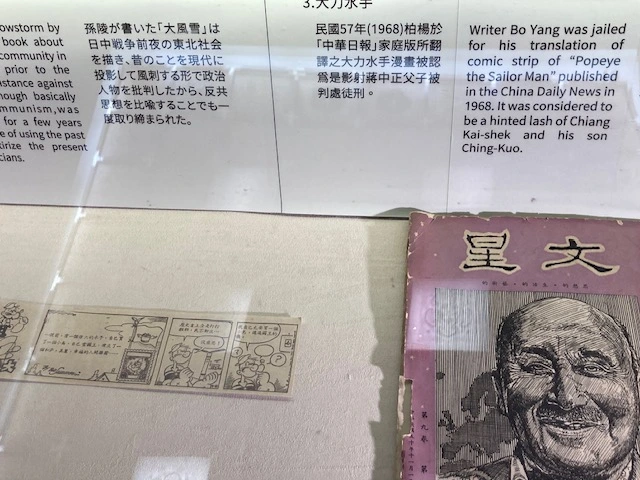
Image 2. Free speech wasn’t always free
That Taiwan is engaging in such self-criticality is a testament to the strength of its democracy and commitment to an open society. Moreover, Taiwan elected (and re-elected) a woman president, unlike the U.S., Taiwan was also the first in Asia to legalize same-sex marriage, starting in 2019.
Toys Galore in Taipei’s train station/ Mega mall
Seemingly all of Taiwan can be reached by train. Taiwan’s trains are spotless, smooth, comfy, and reliable. I would feel rather comfortable having an emergency surgery on board, if needed.
Taipei’s central train station is the hub of national trains, local metro lines, and city/regional buses. This made it the perfect location to add two underground, multi-story shopping malls.
Within these malls, one can find hundreds of coin-operated vending machines offering an innumerable array of collectible toys and figurines. Prices range from $1 to upwards of $50. These made for wonderful, easily packable souvenirs for family members back in the U.S. See Image 3.
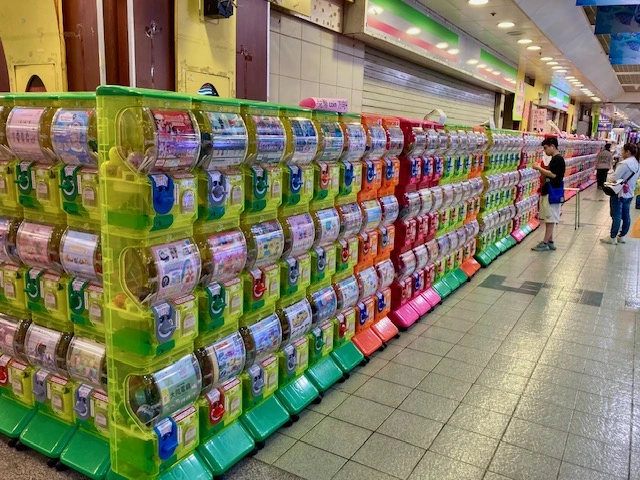
Image 3. The hardest decision of my trip: choosing which toys to choose for whom
Taipei’s Train riders are as diverse as the selection of toys. Men dressed in business suits stand alongside Gothic youth with purple hair, next to a lesbian couple holding hands, beside hijab-wearing Muslim women. The scene reminded me of riding New York City trains (that is, if they were clean, efficient, and the riders were all East Asian looking).
Unabashedly Active Baseball Watching
In 2024, Taiwanese Baseball is enjoying a global moment. In August, Taiwan lost to Florida in the Little League World Series, but in November, Taiwan stunned Japan to win the gold medal in the Premier 12 Tournament. The U.S. Team took bronze.
Attending a professional baseball game as a spectator costs a fraction of an MLB ticket price in the U.S. More importantly, the difference in atmosphere could not be more different. While MLB spectators expect to sit idly for 3 hours (minus the “7th Inning Stretch”) and engorge copious amounts of beer and unhealthful foods, Taiwanese baseball spectators are accustomed to live music and non-stop movement throughout the entire game. While I only attended one game during my five-day trip to Taiwan, I gained confirmation that music and choreographed dances are an integral part of the spectator experience.
Taiwanese fans follow their own team’s mixed-gender cheerleaders/dance team and live brass and percussion musicians for the duration of a game. At the end of a game, the average fan will have expended three times as many calories dancing as eating. The whole event underscored the health-minded nature of Taiwanese (and many East Asian societies) contrasted with sedentary consumption of North American culture.
After the game’s conclusion, the teams bow to their fans and again to their opponents. See Image 4. The most valuable player of the game is identified, interviewed, and then made to dance the team’s official dance alongside his team’s dancers. To the American baseball viewer, the dancing and sportsmanship would seem totally foreign. At the end of a U.S. game, the winning team congratulates themselves, not their opponents. Somewhere between youth leagues and the professional level, U.S. players outgrow this show of good sportsmanship.
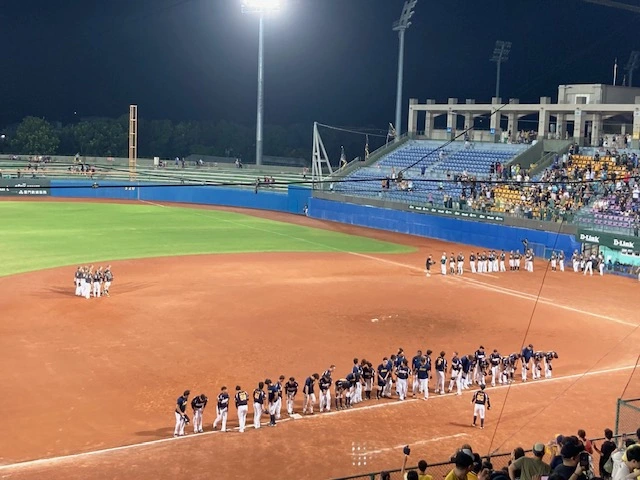
Image 4. Bowing to opponents after a professional baseball game
Indigenous People of Taiwan
Multiple indigenous peoples inhabited Taiwan before the arrival of ethnically Chinese people. This history is much more complicated than I am capable of outlining here. Indigenous Austronesian languages remain endangered today, but still seem to receive recognition and some measure of visibility. See Image 5.
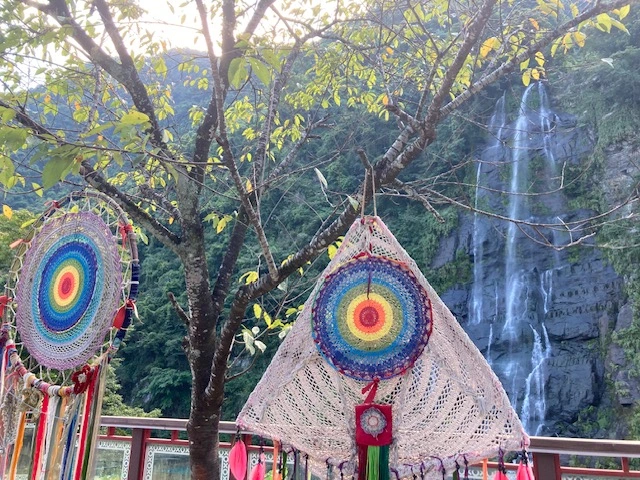
Image 5. Indigenous artwork in a public plaza, high in a mountain town
Aside from indigenous languages, there are multiple dialects of (non-Mandarin) Chinese spoken by Taiwanese, which are reportedly not mutually intelligible.
Developing an appreciation of Taiwan’s linguistic landscape, I did make modest progress in my Mandarin, mostly at train stations, restaurants, and at 7/11 convenience stores. Unlike their North American locations, Taiwanese 7/11s often have a full coffee bar, alcohol bar, hot foods, and ample seating for dining in. For the equivalent of $1, I enjoyed a high-quality iced coffee. See Image 5. I became accustomed to hearing, “What size?” The word “size” (大小) in Mandarin is the combination of the word “large” and “small.” What poetry! I learned there is no common way to say “please,” which left me feeling unacceptably rude to the clerk, so I would add the tag “may I?” (“我可以嗎”?) at the end. Whether or not it was grammatical or customary, it made me feel better, and unfailingly secured me my iced coffee.
Conclusion
Taiwan is a beautiful, clean, fascinating, complicated place. Its mysteries are becoming more and more comprehensible to me as my Mandarin develops. I have a more multi-dimensional understanding of Taiwanese ITAs. Furthermore, enrolling in Mandarin language classes has availed me with insights into the understanding of ITAs language development.
My recent trip to Taiwan may have also sharpened my critical gaze towards my own country. Thomas Jefferson allegedly wrote, “Traveling makes men wiser, but less happy.” Unfortunately, foreign travel is not available to all ITA educators. This would undoubtedly make for better educators. Language teachers, particularly those teaching their own native language, must guard against the ethnocentric biases that are innate in all of us. Being able to identify the wonders, big and small, of ITAs’ homelands could enrich ITA education broadly.
*This article is dedicated to my former ITA students from Taiwan. I can’t wait to return to Taiwan.*
References
Schall S.J., Fr. J. V. (2009, Jan. 29). Active Contemplation: On truth and truthfulness. The Hoya. Retrieved 12/24/24 from https://thehoya.com/uncategorized/active-contemplation-on-truth-and-truthfulness/#:~:text=Aristotle%2C%20in%20book%20four%20of,too%20much%2C%20not%20too%20little.
 Roger W. Anderson, PhD, is an independent scholar living in Monterey, California (USA). He earned a Ph.D. in Foreign/Second Language Education from Ohio State University, master’s degrees in African studies and French from Ohio University, and in Teaching Arabic as a Foreign Language from Middlebury College. Roger believes that a global education must include international language study and the development of intercultural competence. His research focuses on identity and investment in second language acquisition, la Francophonie, Arabic language education, and the internationalization of higher education. In his free time, he enjoys being outdoors and learning new world languages.