
Insights On Supporting ITAIS with Oral Language Development
Lily Compton, Iowa State University, Ames, Iowa, USA
International Teaching Assistants (ITAs) play a crucial role in the educational system in the USA. They often serve as instructors, leading or supporting courses and labs in their field. These ITAs come from various cultural and linguistic backgrounds and often need additional language support from their institutions as they navigate a new culture and language while trying to excel in their teaching roles. While institutions typically provide resources and support to help ITAs succeed, very little is known about specific practices and their effectiveness across different institutions.
To learn more about current practices for oral communication development at individual institutions, we had a conversation with Dr. Lily Compton, the Assistant Director for Programming at Iowa State University's Center for Communication Excellence. She has developed programming for oral communicative skills for ITAs, graduate students, and postdoctoral scholars. Dr. Compton shared insights about various sources of oral skill development support used at Iowa State University and discussed a free e-book that has just been released. Below is our conversation with Dr. Compton about these initiatives.
Dr. Agata Guskaroska (A.G.): Dr. Compton, thank you for taking the time to have this conversation with us and share your expertise with the SPLIS community. Let's start with your story. How did you first get interested in supporting international teaching assistants' language development?
Dr. Lily Compton (L.C).: For my thesis, I explored a research study with international teaching assistants (ITAs). Later, I began working with the Center for Communication Excellence (CCE) at Iowa State University, where I initially taught the ITA courses and developed an online version to support lower-level ITAs. Under the directorship of Dr. Cotos, we started providing individual English-speaking consultations for international students to work on their oral proficiency.
A.G.: Based on your experience, what are some common challenges that ITAs face in their speaking or pronunciation, especially during their first year in the USA?
L.C.: There are two main categories: segmentals and suprasegmentals. segmentals involve specific consonant or vowel productions that are challenging due to their first language. Common examples include difficulties with L and R sounds or the F and TH sounds. Suprasegmentals involve the perception of how well a person speaks, which relies on the listener. This includes intonation patterns, speech smoothness, and appropriate chunking of information. For instance, if someone's speech constantly rises in intonation due to their first language patterns, it might make listeners feel exhausted or confused. Cultural differences also pose challenges, such as understanding classroom expectations and responding to student questions effectively.
A.G.: Given the diverse needs of ITAs, what are some ways that the CCE supports the development of ITAs' oral communication skills at Iowa State University?
L.C.: We support oral communication development in several ways. We start with the Oral English Certification Test (OECT) to measure oral proficiency and teaching communication skills. Based on the OECT results, ITAs are placed into different levels and corresponding grad study courses focusing on pronunciation, speaking, and listening skills. At lower levels, we focus more on segmental and suprasegmental aspects, while at higher levels, we emphasize handling questions, presentation skills, and teaching more effectively.
We also offer Peer Speaking Practice Groups, which are more informal and facilitated by trained English Speaking Consultants. These groups provide a social space for grad students to relax and discuss their challenges and interests. For example, they might practice small talk, which is crucial for networking but challenging for many international students.
Additionally, we offer Individual Speaking Consultations where students can work on specific areas of their language skills. Our speaking consultants work one-on-one with the students and conduct diagnostics to identify areas for improvement and work on improving those targeted areas. This service is open to all graduate international students, not just ITAs.
Finally, we have developed an Open Educational Resource (OER) focusing on oral communication for ITAs that can be used in class or for autonomous learning.
A.G.: That’s wonderful. It seems that ITAs at ISU get truly valuable support from several sources. Now, for our SPLIS community who are considering expanding the language development support for their ITAs, let’s break this down and provide more details. What are some of the specific strategies you use in the Peer Speaking Practice Groups?
L.C.: In the Peer Speaking Practice Groups, we focus on practical strategies that students can use in real-life situations. For example, we might practice how to start and end a conversation, which is often challenging for international students. We also discuss cultural boundaries and safe topics for small talk. By role-playing these scenarios, students gain confidence and are better prepared for real interactions.
A.G.: You also mentioned the individual consultations. Can you tell us how they differ from the peer groups?
L.C.: Individual consultations are more personalized and focused on the specific needs of the student. Our consultants work one-on-one with students to identify their goals and areas for improvement. They might work on pronunciation, speaking, listening, or even preparing for a specific event like a conference presentation. The consultations are flexible, allowing students to come as often as they need or just for a single session.
A.G.: Now, the final resource that you discussed is the Open Education Resource. Can you tell us more about this resource and the ways it contributes to supporting instructors of ITA courses and students?
L.C.: Yes, we have developed an open educational resource, an interactive e-book, titled “Oral Communication for Non-native Speakers of English”. The first edition focused on pronunciation, and now we are publishing the second edition where we have expanded it to include chapters on speaking and listening. The e-book is designed to be a comprehensive resource for both instructors and learners, with practical activities and scenarios that reflect real-life situations that international graduate students, ITAs, and postdocs might encounter.
The book is free and intended for both instructors and learners. We have structured it in a way that makes it easy to use for both self-study and classroom instruction. Each chapter is broken down into smaller chunks, with clear explanations and practical activities.
Each chapter has a teacher's corner with additional resources and ideas for classroom integration. The book also provides scenarios to help readers see themselves in realistic situations, making the content more meaningful and motivating.
A.G.: Can you expand a little bit on the scenario-based approach in the e-book?
L.C.: Scenario-based learning grabs attention and provides a starting point for readers to see themselves in realistic situations. It helps them relate to the content and motivates them to read further. By focusing on specific challenges in each scenario, readers can work on targeted strategies without feeling overwhelmed.
A.G.: What role does technology play in the book?
L.C.: Technology plays a significant role in the book. We have incorporated automatic speech recognition (ASR) tools that provide immediate feedback on pronunciation. There are also interactive activities that allow learners to practice and assess their skills. These features make the book a valuable resource for self-paced learning, allowing students to practice and improve their skills independently.
A.G.: What feedback have you received from ITAs who have received support for the oral communication development at ISU?
L.C.: The feedback has been overwhelmingly positive. ITAs appreciate the practical focus of the book and the opportunity to practice real-life scenarios. They also value the personalized support they receive through individual consultations and peer speaking practice groups. Many have reported significant improvements in their communication skills and increased confidence in their teaching roles.
A.G.: How do you see the future of language support for ITAs evolving?
L.C.: I believe that language support for ITAs will continue to evolve with advancements in technology and a greater emphasis on personalized learning. We are already seeing the benefits of incorporating speech recognition and interactive tools into our resources. In the future, I envision even more innovative approaches to language support, such as virtual reality simulations and AI-driven language learning platforms. The goal is to provide ITAs with the tools and support they need to succeed in their roles and contribute effectively to their academic communities.
A.G.: Any final advice for educators working on oral skills with their students?
L.C.: My advice for educators is to be patient and supportive. Understand that ITAs are navigating a new culture and language while also trying to excel in their teaching roles. Provide them with the resources and support they need to succeed. For ITAs, my advice is to take advantage of the resources available to you. Practice as much as you can, seek feedback, and don't be afraid to ask for help. Remember that improving your communication skills is a journey, and every step you take brings you closer to your goals.
A.G. Dr. Compton, thank you so much for taking the time to have this conversation with us. We hope the SPLIS community will truly benefit from your valuable insights, practices, and free resources for educators and learners.
D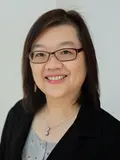 r. Lily Compton is the Assistant Director for Programming at the Iowa State University’s Center for Communication Excellence, Graduate College. She developed and taught oral communication courses focusing on English for Teaching Purposes. Additionally, she oversees the institutional test, the Oral English Certification Test (OECT), and language support for international teaching assistants (ITAs). She supervises the instructors of the English for Teaching Purposes courses. She also develops programming for other oral communicative skills for all graduate students and postdoctoral scholars including interpersonal, academic, and professional communication, and training curriculum for English Speaking and Interpersonal Communication consultants.
Link to the OER: Oral Communication for Non-native Speakers of English, 2nd Edition