
Letter from the Chair
Fatima Aldajani, University of Toledo, Toledo, OH, USA
Dear colleagues,
It is an honor to write to you for the first time as Chair of the Refugee Concerns Interest Section.
I want to begin this letter with a question Edward Said taught a generation of readers to ask of any text about a distant or displaced people: who is speaking, and from where? It's a question I've carried through fifteen years of work alongside refugee and multilingual learners across several countries, and it feels like the right place to start.
Representation is never neutral. How a population gets described, as vulnerable or resilient, as case study or as author of its own account, is shaped by who holds the pen. This issue offers a partial, worthwhile correction to that. Hadid and Hauber-Özer's introduction to their special issue reframes educational equity for refugees around asset-based, humanizing pedagogies, insisting we move past a deficit lens that reduces students to their gaps. Chime writes not as an outside observer of displacement in Nigeria but as a teacher educator working inside the conditions she describes. Caruso writes from years spent alongside Afghan learners in her own California classroom, not from a policy brief about them. Hauber-Özer's book, reviewed here by Özkaynak, insists on Syrian students' own narratives of investment and aspiration rather than a researcher's account layered over their silence. Read together, these pieces model something Said asked of us: proximity to the people being written about, and enough humility to let their framing, not ours, set the terms.
That proximity also surfaces what usually gets flattened. "Refugee" as a category can erase as much as it names; it invites a single story where there are, in fact, many. This issue resists that flattening by staying specific: a synthesis grounded in eleven separate studies rather than one general claim, Nigerian teachers navigating trauma and interrupted schooling under particular conditions of insecurity, Afghan newcomers in Northern California whose primary technology is a smartphone, not a laptop, and Syrian young adults in Turkish universities, whose paths are shaped by legal status, language policy, and years of "temporary protection" rather than by any generic account of resilience. Each piece insists on the specific over the general, a discipline worth naming, and one that resists the very homogenizing gaze Said spent his career examining.
And still, something is worth naming honestly rather than resolving too neatly. Even a careful issue like this one is compiled and read by many of us writing or thinking from relative distance, geographic, institutional, or otherwise, from the displacement it describes. That distance doesn't disqualify the effort, but it does mean the question of who is speaking, and from where, has to stay open rather than get answered once and set aside. I don't think this issue, or any single letter, should try to close that gap. I think our task is to keep noticing it.
So my closing in this letter is less "what should RCIS be doing" and more pointed: whose voices, from where, are we not yet hearing from? If there's a colleague, a context, or a community this newsletter hasn't reached, I'd genuinely like to know, and to help make room.
My thanks to Linda for the care she's brought to editing this issue, to every contributor for the work behind these pages, and to all of you for what you carry into your classrooms daily. I'm glad to be in this role, and gladder still to be in conversation with you about where it should go.
With gratitude and in solidarity,
Fatima Aldajani, PhD
Chair, Refugee Concerns Interest Section
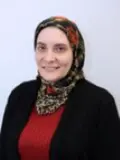 Dr. Fatima Aldajani is an educator and researcher specializing in multilingual education, equity, social justice, and culturally responsive teaching. With her global experience, she develops inclusive curricula, trains teachers, and advocates for anti-racist, Islamophobia and antisemitism education. Her work also explores AI’s role in personalized learning and digital equity.