
Meet the Experts: An Interview With Dua Jabr Dajani
Dua Jabr Dajani, Ministry of Education & David Yellin College of Education, Israel
James J. Riley, U.S. Department of State English Language Programs, Portugal
James: Tell us who you are as a TESOL person.
Dua: I am a Palestinian educator and researcher serving as Regional Advisor of Pedagogy at the Israeli Ministry of Education in East Jerusalem, overseeing EFL instruction and teacher development across around 200 schools. My research interests are reflected in my recent publication, "Empowering Through English: A Case Study From Jerusalem," published in The Teacher Trainer journal in 2024, where I examine what purposeful, identity-affirming English instruction looks like in practice within the Jerusalem context. I view teaching as both a responsibility and a purposeful commitment. In Jerusalem's complex educational reality, schools are among the few spaces where the future can be shaped with intention. As a regional advisor, I support English teachers, helping them translate pedagogical theory into meaningful and context-responsive classroom practice. I believe that investing in teachers as confident, knowledgeable professionals is the most sustainable route to student growth, fostering learning environments built on dignity, rigor, and a strong sense of student voice.
James: What opportunities and challenges do you see for multilingual learners in East Jerusalem?
Dua: Learners in East Jerusalem grow up within complex political, economic, and linguistic realities. English functions strictly as a foreign language here. Unlike Hebrew, which is widely present in the surrounding environment, English exposure is largely confined to the classroom, which places a significant responsibility on schools to provide meaningful and structured language practice. Students do not always see their identities reflected in curricular materials, so teachers must adapt instruction in ways that affirm students' experiences while maintaining academic rigor. At the same time, many students bring strong critical awareness and a deep sensitivity to fairness and social responsibility. When English instruction moves beyond grammar toward critical thinking and purposeful expression, it becomes a bridge to higher education, professional mobility, and global engagement, making language education in East Jerusalem not only academic but transformative.
James: What person or experience has had the greatest impact on your research and/or career development in TESOL?
Dua: My career has been shaped by both personal experience and professional belief. As a child, my father, who earned his PhD in Education from the University of Northern Colorado in the USA, brought beautifully illustrated English books home during his visits, sparking curiosity and a love for language. My siblings and I competed to read more and, after much debate, convinced our parents to let us stay up late to watch American television, insisting it was strictly for our English, though the true motivation remains a matter of family debate. That early enthusiasm gradually deepened into a genuine interest in how language shapes access, confidence, and opportunity.
My academic research on critical thinking in the English classroom helped me articulate what I had sensed intuitively: language shapes thinking, and teaching English is never neutral. It influences how students interpret information, construct arguments, and position themselves in the world. Participating in the USA International Leadership Program in 2023 broadened my perspective further, reinforcing my belief that meaningful educational change begins with strong, well-supported teachers, a belief that continues to guide my work today.
James: In your role as Regional Advisor of Pedagogy for the Ministry of Education, how important is second language writing instruction for the teachers and students you serve?
Dua: Writing instruction is essential because writing is where voice becomes visible. It is the most cognitively demanding of the four language skills, yet also one of the most transformative. Through writing, students organize their thinking, construct arguments, and shift from passive receivers of information to active creators of meaning. Effective writing instruction requires thoughtful scaffolding and a clear understanding of writing as a process: planning, drafting, revising, and reflecting. When taught well, writing strengthens not only language accuracy, but also students' ability to express opinions and communicate with purpose. For the teachers and students I serve, writing is not simply a task; it is a way for young people to develop confidence in their thinking and their voice in English.
James: In your current context, how do teachers incorporate writing tasks with young learners?
Dua: Teachers introduce writing carefully and gradually, beginning with oral discussion, shared writing, and guided practice before moving toward independence. In our "Speak Up" initiative, students created short English videos and quickly realized they needed writing to organize their ideas clearly. They drafted, revised, and reflected before recording, discovering that strong expression begins with structured thinking. This approach matters because we want students not only to speak, but to think deeply about what they are saying. Writing transforms language learning from repetition into reflection.
James: As someone who has done extensive research and service for the field and community, what would you recommend for teachers who want to improve their ability to teach ELLs - particularly where second language writing is concerned?
Dua: Meaningful writing instruction begins with purpose. Teachers should approach writing as a supported process, moving through modeling, guided practice, and gradual independence, so that students learn to express ideas clearly rather than simply produce correct sentences. Designing authentic writing tasks, where students write for real or imagined readers who are also English learners, transforms writing into purposeful communication rather than an isolated exercise.
In our own professional development as Advisors of Pedagogy, much of our collaboration happens through written English, emails, shared documents, and professional reflections. When professional spaces are not centered on English, they often shift to Hebrew. Written English, in this context, allows us to collaborate on "more equal" footing within a setting shaped by complex power dynamics—a dynamic I explored in depth in the work on “Teacher Leadership Development: Building Bridges not Borders between Israeli Jewish and Palestinian Educators.” The same applies to students. When learners do not share a first language, written English can serve as a lingua franca, a practical bridge for exchanging ideas and communicating clearly across languages.
James: Can you talk about the US State Department’s involvement with the Ministry of Education and how they are working together to serve teachers in the region? Looking forward, in what ways can these programs best serve teachers in East Jerusalem?
Dua: Our cooperation with the U.S. Embassy began during the COVID-19 pandemic and has grown meaningfully since. At its core, this collaboration opens worlds of professionalism for our teachers by bringing TESOL experts from different countries into direct conversation with teachers in East Jerusalem. Courses and workshops are designed not only to introduce new ideas, but to ask teachers to implement them and bring back classroom artifacts for reflection. Over time, a culture of sharing has developed, including teachers videotaping their own lessons to reflect on practice openly, building a genuine professional learning community. When we visit classrooms today, we see the impact directly. Tools like KWL charts where students identify what they Know, what they Want to know, and what they Learned about a topic, approaches to vocabulary instruction that develop thinking, and differentiated texts generated with AI for three levels of students are appearing in lessons, and we know where those ideas came from.
To me personally, this partnership is genuinely valuable. It is about engaging in conversation, asking questions, and refining what works best for our teachers and students. Sustaining it requires careful planning, coordination, and continuous reflection, yet the investment is worthwhile. We intentionally build in cycles of implementation and feedback, asking teachers to share classroom evidence of practice, so that learning translates into real impact. This partnership represents professional growth, shared responsibility, and a sustained commitment to strengthening English education in East Jerusalem.
I am grateful for the opportunity to reflect on my work and the context in which it unfolds. It is a privilege to collaborate with dedicated colleagues and teachers who invest deeply in their students despite the complexities of our environment. I remain committed to strengthening professional practice, expanding meaningful opportunities for learners, and contributing thoughtfully to the broader TESOL community.
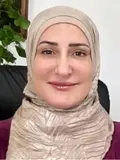
Dua Jabr Dajani, PhD is Regional Advisor of Pedagogy in Jerusalem, Ministry of Education, working with Arab schools, and an educator at David Yellin College of Education. Her work advances EFL instruction, teacher development, critical thinking, teacher leadership, and equitable education in multilingual and challenging educational contexts. She has presented and published internationally on cognitive development, professional learning communities, problem-based learning, and sustaining education during crisis and social unrest.

James Riley, EdS, PhD is an English Language Specialist for the US Department of State’s English Language Programs. He has been teaching for nearly two decades and holds an MA in TESOL, an EdS in Instructional Technology, and a PhD in Educational Leadership. His research interests lie in academic writing, flipped language learning, peer observation of teaching, and social identity construction. He recently received the US State Department’s Virtual Educator Impact Award for his work in Myanmar.