
Nourishing the SLW Teacher: Finding Balance in a World of High Pressure and AI
Gabrielle Smith, Department of English, University of Vienna, Austria
Introduction
As writing instructors, we invest a staggering amount of our personal time into our professional practice. We spend weekends and late nights grading papers in the blue light of screens and providing nuanced feedback. Simultaneously, we might use our remaining free time to publish research or to help our second language students navigate the personal challenges they face. In recent years, this already demanding role has intensified. As Ken Hyland emphasizes in his plenary at the 2025 International Conference on Written Corrective Feedback (WCF25) in Barcelona, writing instructors today are facing larger classes, heavier workloads, and rising expectations for more personalized feedback. Caught in this tension, we find ourselves pressured to operate like machines, striving to be faster, more efficient, and constantly responsive. Furthermore, the introduction of AI has brought new burdens to our profession. Writing teachers are now called upon to detect AI use in student writing, an effort that is time-consuming and often inconclusive.
Yet, the deeper challenge is existential. Writing teachers were among the first professionals whose field was rapidly disrupted by the release of ChatGPT in 2022. By 2026, there is still little consensus on how to recalibrate writing instruction in the age of AI. This lack of clear direction leaves individual educators to navigate complex decisions on their own, weighing how much, if any, AI to permit in the classroom and facing conflicting opinions on all sides.
These pressures affect us on a deeply physical and human level. While teaching writing remains meaningful, it increasingly comes at a cost of burnout and exhaustion. Hyland (2025) highlights current levels of “feedback fatigue” and “teacher despair” specifically among writing instructors, yet this crisis extends to the broader profession. In his plenary, Hyland discusses research by Jacobs-Pinson (2025) showing that burnout rates among U.S. female teachers reached 63% in 2024, a significant increase from 56% in 2021. Hyland goes on to address the environment in the UK, where university student numbers have surged while thousands of academics have left the field (Jacobs-Pinson, 2025). While these figures emerge from specific Western contexts, they serve as stark indicators of a wider global phenomenon. Writing instructors worldwide face a shared struggle to maintain human balance within increasingly mechanized systems.
The physiological toll of this pressure is clear in a newly developing line of research connecting teacher burnout to long-term health issues. As Madigan et al. (2023) show, teacher burnout is not just a mental state; it manifests in tangible physical ways. These effects include an increased risk of chronic diseases such as heart disease and diabetes, alongside somatic issues like headaches, sleep disorders, and reduced immunity. A colleague once described burnout as a slow-acting poison: it remains largely invisible until the damage is severe. As writing teachers, we are trained to notice subtle nuances in language and argumentation, yet we rarely recognize the early signs of our own depletion.
Given this often-invisible erosion of wellbeing, sustaining educator health cannot be left to chance or individual resilience alone. To deliver high-quality instruction, educators must be nourished, purposeful, and well-rested. This necessity is backed by research which, although often focused on the K–12 environment, confirms that student outcomes improve when teachers are energized and supported (e.g., Oberle & Schonert-Reichl, 2016).
From this perspective, this article advances a simple premise: teacher wellbeing is not a personal luxury but a fundamental component of educational infrastructure. If teachers are the primary delivery system of education, their health, vitality, and motivation are as essential as any infrastructural resource. This is all the more critical in the age of AI, where the teacher’s role as a distinctly human presence becomes increasingly important.
Last summer, I enrolled in the Harvard Medical School Lifestyle and Wellness Coaching program to better understand these converging pressures and to explore sustainable approaches to educator wellbeing. In this article, I present seven pillars of health and wellbeing that are essential for high-quality instruction and educational leadership. My aim is to offer a shared vocabulary for discussing teaching vitality, alongside an evaluative framework for examining how institutional structures either nourish or deplete the educators they depend on. In the age of high pressure and AI, the goal is not to compete with machines, but to deepen our capacity for being fully human, which means feeling healthy, connected, and guided by purpose.
Building the Foundations of Educator Vitality
Harvard Medical School highlights key pillars of health and wellness, such as nutrition, sleep, and physical movement, that are relevant for us as SLW instructors (see Harvard Medical School, 2023). Stanford promotes a similar list of wellbeing pillars but, importantly, adds cognitive enhancement alongside gratitude and purpose (see Stanford Lifestyle Medicine, n.d.). These pillars fall under the umbrella of lifestyle medicine. What is truly striking is that research shows lifestyle interventions can outperform many pharmaceutical medications in preventing and even reversing various chronic diseases (Osher Center for Integrative Medicine, 2024). This realization is particularly powerful for our profession, as these are the same chronic conditions that have been linked directly to the long-term stress of teacher burnout. The good news is that even small, intentional changes in lifestyle can have profound effects (Koemel et al., 2026).
However, this foundational topic is just beginning to find its rightful place in the educational sphere. Madigan et al. (2023) have identified major gaps in research on the physical effects of teacher burnout and call for more theoretical frameworks tailored to teacher wellbeing. They further note that “teacher burnout features surprisingly little in education policy” (p. 10), emphasizing the urgent need for targeted organizational interventions. This gap is particularly evident in the field of SLW. While there is growing research on language teacher stress, there remains a notable lack of studies specifically focused on the health and wellbeing of writing instructors, whose labor-intensive practice requires unique forms of support.
To bridge this gap, I’ve adapted the wellness pillars from Harvard and Stanford Universities for the teaching context, with a focus on the unique demands of writing teachers (see Fig. 1). This framework is a starting point, and I invite the SLW community to share what else is essential to our collective wellbeing in a rapidly shifting world.
The 7 Pillars of Educator Vitality
-
Healthful Energy: Choosing nutrition that sustains the high-level cognitive stamina required for a vibrant classroom presence and the endurance needed for intensive student feedback.
-
The Joy of Movement: Reclaiming our bodies through energizing, feel-good movement, releasing the tension of the desk, and the sedentary demands of grading, ideally outside in nature.
-
Restorative Sleep: Protecting the sacred space where our patience, nuance, and creative spark are rebuilt each night.
-
Inner Calm: Cultivating a "breathing space" and a quiet center amidst challenges, allowing us to respond rather than react.
-
Enjoying Friends and Family: Breaking the isolation of the "lone grader" by prioritizing the people who ground us and the social connections that make us whole.
-
A Deep Compass - Reclaiming the "Why": Using gratitude, reflection, and/or faith to anchor ourselves in our unique human spark and the bigger vision of our personal mission and purpose.
-
A Sharp and Vibrant Mind: Actively protecting our mental baseline and brain health to maintain long-term career clarity—staying as curious and engaged as the students we teach.
In an era of relentless pressure, you can think of these pillars as your personal board of health. The pillars work together as a set of 'internal doctors' that safeguard your capacity to lead and teach with clarity.
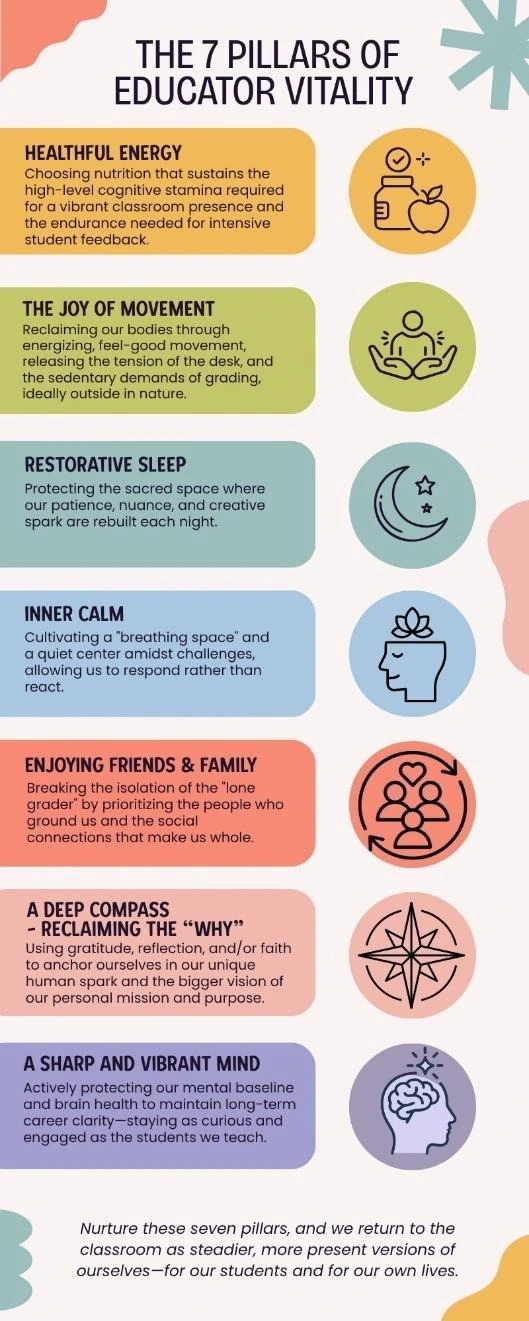
Figure 1: The 7 Pillars of Educator Vitality
A Rubric for Assessing Your Own Teacher Health and Wellbeing
Being aware of the seven pillars is an important first step; however, sustainable change requires a more intentional internal inventory. To facilitate this, I have developed the 7 Pillars Health and Wellness Rubric for Teachers, presented below (see Fig. 2). This tool reimagines the rubric—a staple of our pedagogical craft in writing instruction—as a framework for examining our own professional vitality. We spend our professional lives grading student progress with great care; this is our chance to give our own health the same rigorous attention we give a final draft.
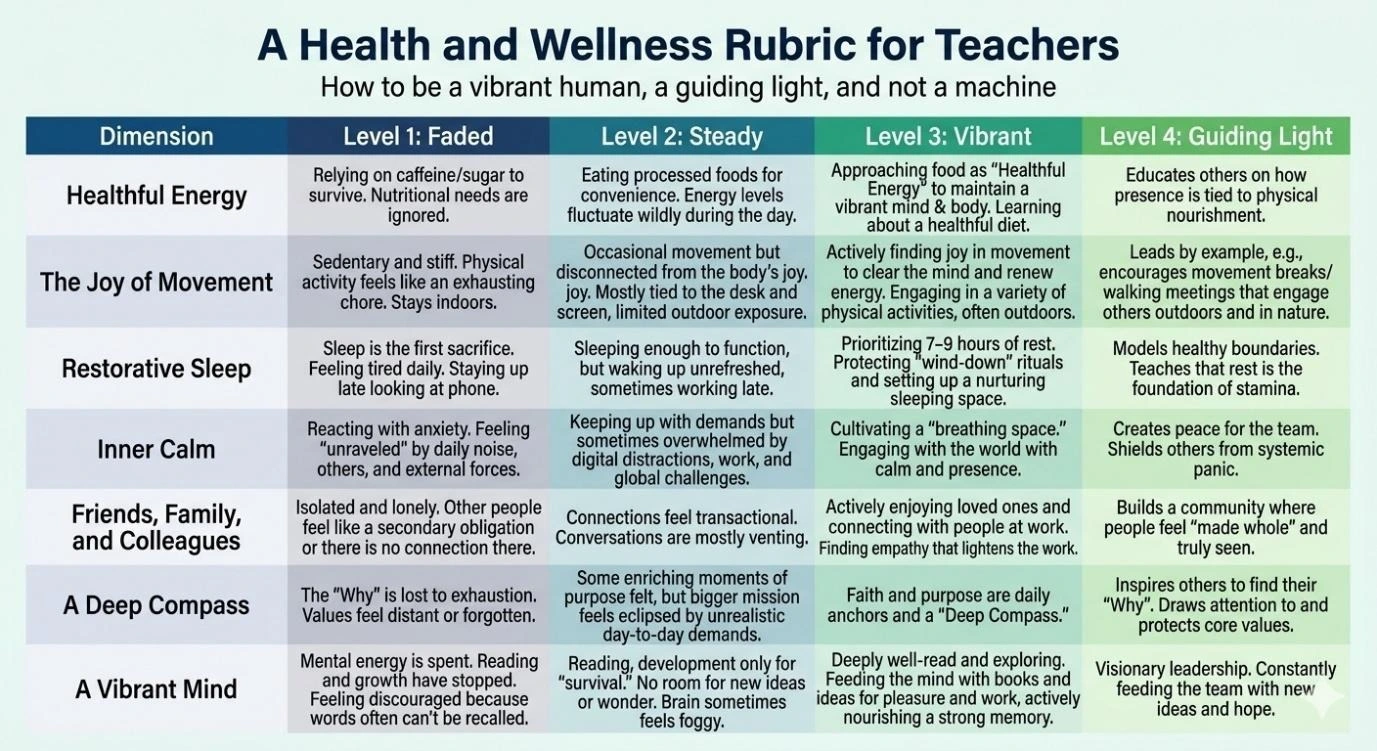
Figure 2: A Health and Wellness Rubric for Teachers: How to Be a Vibrant Human, a Guiding Light, and not a Machine
Note: The rubric in Figure 2 was developed by the author and formatted using the Nano Banana 2 generation tool within Google Gemini, March 12, 2026.
The Institutional Wellness Audit
While we must nurture our own vitality, it is equally critical to look outward at the systems we inhabit. Do our programs support the inspiring, human presence we bring to the classroom, or do they treat that presence as a depletable resource and expect us to operate as machine-like entities?
The second rubric provided below, A Health and Wellness Rubric for Educational Institutions, serves as a starting point for teams to identify where systemic changes can fortify our educational wellness infrastructure (see Fig. 3). This rubric is not meant to sidestep the very real constraints that institutions face, such as the familiar limitations in financial resources, time, and physical space. However, even micro-shifts in policy can lead to a more sustainable culture for everyone. At the very least, discussions around this rubric can begin to position teacher wellness within the framework of formal educational policy.
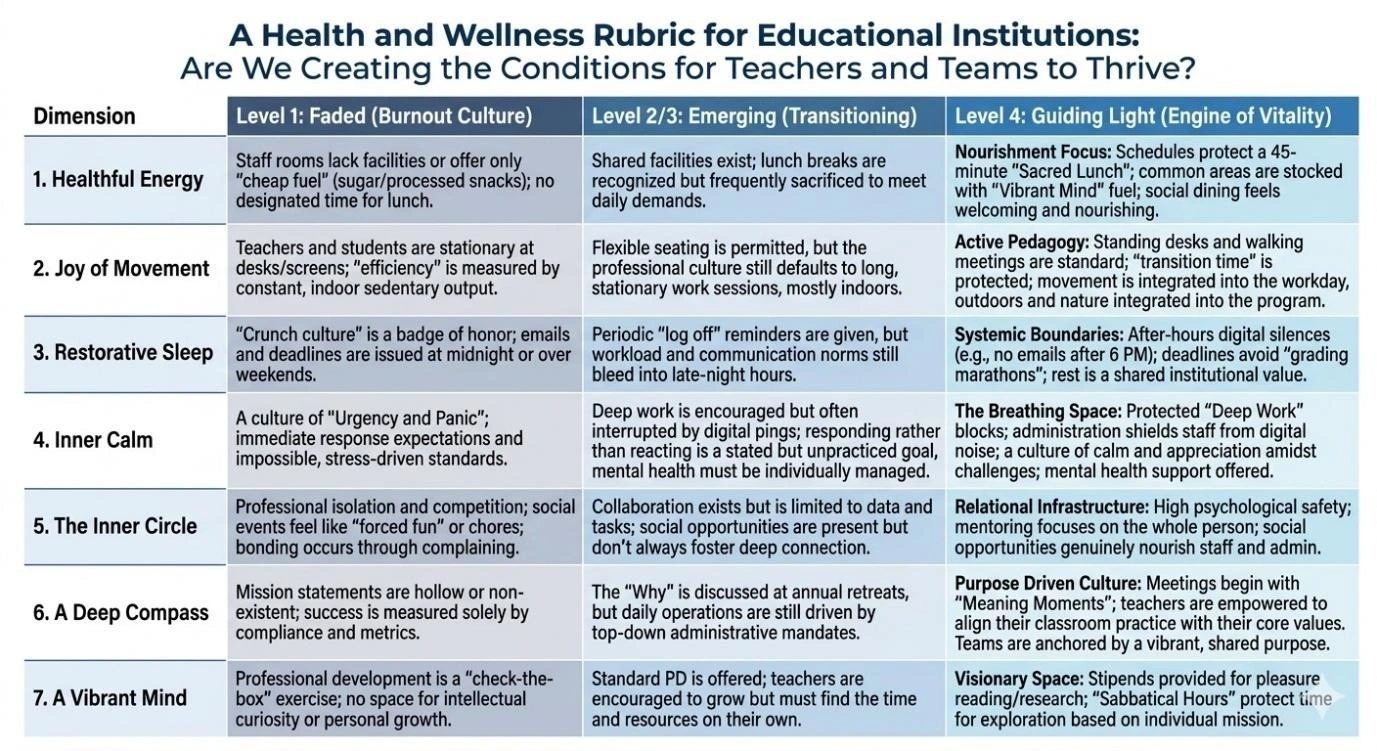
Figure 3: A Health and Wellness Rubric for Educational Institutions: Are We Creating the Conditions for Teachers and Teams to Thrive?
Note: The rubric in Figure 3 was developed by the author and formatted using the Nano Banana 2 generation tool within Google Gemini, March 12, 2026.
Final Thoughts
As rising workload pressures, geopolitical strain, and AI disruptions reshape our field, maintaining our vitality and sense of purpose as educators matters more than ever. As writing teachers, we play an essential role in fostering a strong, critically engaged society. Our work is to motivate the next generation, but to do that, we must also be sustained. I hope that by cross-pollinating insights from Harvard Medical School and Stanford University’s lifestyle medicine research with our own field, we can establish a healthy, human-centric path forward for our institutions and our lives. My aim is to spark a wider, more active discussion and greater focus on supporting SLW educator vitality in the age of AI. We must move beyond viewing wellness as a private, luxury endeavor and recognize that the presence of a nourished teacher is directly related to educational outcomes and the sustainability of our organizations.

Drawing on years of experience as a SLW teacher at the University of Vienna and Stanford University, Gabrielle Smith champions the vital human spark in the modern writing classroom. Her current focus is on helping teachers and students thrive with purpose and vibrant health in the age of AI.
References
Google. (2026). Gemini (Nano Banana 2 version) [Large language model].
https://gemini.google.com/
Harvard Medical School. (2023). Tips for HR leaders: Six simple ways to support staff health and work performance. https://learn.hms.harvard.edu/insights/all-insights/tips-hr-leaders-six-simple-ways-support-staff-health-and-work-performance
Hyland, K. (2025). EFL teachers and feedback fatigue: AI to the rescue? Language Teaching, 1–17. Advance online publication. https://doi.org/10.1017/S0261444825101018
Jacobs-Pinson, E. (2025, January 15). 25+ teacher burnout statistics: A crisis we can’t ignore. Crown Counseling. Retrieved May 7, 2026, from https://crowncounseling.com/statistics/teacher-burnout/
Koemel, N. A., Biswas, R. K., Ahmadi, M. N., Teixeira-Pinto, A., Hamer, M., Rezende, L. F. M., Mitchell, J., Leech, R. M., Sawan, M., Allman-Farinelli, M., Dumuid, D., Bauman, A., Maher, C., Barrett, S., Chow, C., Gibson, A. A., Raubenheimer, D., Hocking, S. L., Williams, K., … Stamatakis, E. (2026). Minimum combined sleep, physical activity, and nutrition variations associated with lifespan and healthspan improvements: A population cohort study. eClinicalMedicine, 92, 103741. https://doi.org/10.1016/j.eclinm.2025.103741
Madigan, D. J., Kim, L. E., Glandorf, H. L., & Kavanagh, O. (2023). Teacher burnout and physical health: A systematic review. International Journal of Educational Research, 119, 102173. https://doi.org/10.1016/j.ijer.2023.102173
Oberle, E., & Schonert-Reichl, K. A. (2016). Stress contagion in the classroom? The link between classroom teacher burnout and morning cortisol in elementary school students. Social Science & Medicine, 159, 30–37. https://doi.org/10.1016/j.socscimed.2016.04.031
Osher Center for Integrative Medicine. (2024, March 5). The power of lifestyle medicine for patients and providers, with Beth Frates, MD [Video]. YouTube. https://www.youtube.com/watch?v=1elG8AaZe4U
Stanford Lifestyle Medicine. (n.d.). Lifestyle medicine. https://lifestylemedicine.stanford.edu/
AI Use Statement: During the writing of this article, Google Gemini 3.1 Pro, Gemini 3 Flash Image (Nano Banana 2) and OpenAI GPT-5.4 Thinking were consulted in a critical process to assist with creating images, synonym refinement, polishing, technical editing, and some conceptual brainstorming. The core philosophy and synthesis of ideas remain entirely my own.
Editorial note: The views expressed in this article are those of the author and do not necessarily reflect the views of the SLW Interest Section or TESOL International Association. The SLW Interest Section does not endorse the Harvard Medical School Lifestyle and Wellness Coaching program or the Stanford Lifestyle Medicine program.