
Five Steps for Applying for English Teaching Abroad Programs
Shelley Hawthorne Smith, University of Arizona, USA
Introduction
I have made plenty of poor decisions in my life. But recently, during the break of my class, “Publishing Academic Articles in English,” I told my students that it was my fiftieth birthday and presented the treats I had brought.
“We have to sing to you!” one student said. So, they did:
Que linda esta la manana
En qu vengo a saludarte
Venimos todos con gusto
Y placer a felicitarte
El dia en que tu naciste
Nacieron todas as flores . . .
I looked around the ancient, ornate room where our class was held and at the students, and I felt so lucky to be with these graduate students studying political science, architecture, chemistry, and education. I thought, applying for the Fulbright-García Robles Teaching English as a Foreign Language was an excellent decision.
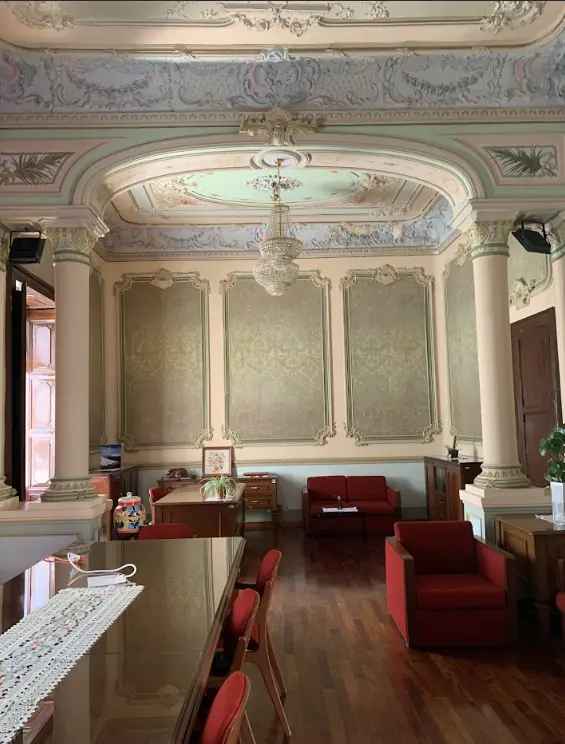
Image 1: Classroom at Casa Palma BUAP
As Second Language Writing specialists, our background in language teaching and education around cultural complexities uniquely positions us to engage in professional development opportunities in various countries. While applying for international opportunities is often seen as an option for fresh college graduates, I have found that these opportunities can be enriching and motivating for mid-career professionals as well, even for those of us who have three teenagers. My experience at the Benemérita Universidad Autónoma de Puebla (BUAP) has given me new connections; opened my eyes to fresh perspectives on teaching language, writing and culture; and renewed my enthusiasm for working in SLW.
Based on both my own Fulbright application process and over a decade of experience working with graduate students applying for fellowships, I offer five steps for applying for international professional development opportunities at any stage of your career.
1. Find Opportunities
If you are part of a large institution, you are likely to have access to databases of funding opportunities like Pivot and Grant Forward. These huge databases list opportunities totaling billions of dollars in funding. Learning to effectively search and filter the information requires a little practice, and I recommend asking a librarian for help or watching some instructional YouTube tutorials for guidance. However, better than any expensive tool, the premier resource for anyone looking for funding opportunities is your social and professional network.
In my own case, I knew about Fulbright, but I did not know that Fulbright supports writing work until I saw a blog post on Connecting Writing Centers Across Borders from a Fulbright scholar helping to build a first-year writing program at a university in Uganda (Deans, 2021). I reached out to the author to ask about the application process, and he described how he developed his application and offered to connect me with what could be the next step in his project. To find funding opportunities, I recommend that you talk to colleagues, read newsletters, and inquire about funding at conferences.
A few additional examples of possible funding opportunities to teach abroad include:
-
English Program in Korea (EPIK) is open for teachers from Australia, Canada, Ireland, New Zealand, United Kingdom, United States, or South Africa. The EPIK states that they are looking for "responsible, enthusiastic native English speakers [although they do not specify what they mean by this] with a motivation to share their knowledge and language with Korean students and teachers."
-
Japan Exchange and Teaching Program (JET) is open to teachers from multiple countries to support English language instruction and international exchange.
-
The Fulbright English Teaching Assistant Program is for U.S. citizens with BA degrees and an interest in teaching in other countries. The Fulbright Scholar program is for scholars with PhDs or other terminal degrees and supports research and teaching in a wide range of fields; the Fulbright-García Robles Teaching English as a Foreign Language in Mexico is part of the Fulbright Scholar Program.
-
English Language Programs through the U.S. State Department has three different programs for U.S. citizens to teach English or develop language learning programming. The English Language Fellow program is a highly selective 10-month commitment to teach English and provide English teacher training at an institute of higher learning abroad. The English Language Specialist program involves shorter term assignments that require more expertise in the specific area to which you are applying. The Virtual Educator program can be done from the United States and requires a shorter commitment.
-
Peace Corps provides two different programs with opportunities for U.S. citizens in over 60 countries. Peace Corps Response provides 6-to-12-month service opportunities for professionals with a BA and at least two years of experience. Peace Corps Volunteers take on a longer commitment of slightly over two years for citizens who are over 18. Specific opportunities are listed on their website.
2. Do Background Research
We talk with our students about rhetorical awareness, cognitive flexibility, and resilience toward ambiguity. All of this is excellent advice when applying for global opportunities.
In my own case, doing research led me to realize that Latin America would be the best fit for me and my work. In talking to the Fulbright liaison at my institution, I learned about the Fulbright-García Robles Teaching English as a Foreign Language award in Mexico. I talked with people who were from and who had worked in Mexico to understand if I could do the work needed through the opportunity; for example, the call for proposals made it clear that I could be working in a teachers’ college, and I wanted to know if I would need more of a background in educational theories to do the work effectively or if my background in writing and rhetoric would be sufficient. Additionally, intermediate Spanish was recommended for the award, so once I decided to apply to this specific opportunity, I began taking Spanish lessons to refresh my language skills. The conversations helped me understand if the fellowship was a good fit for me, begin to prepare for the application, and determine how to shape my application in the best possible way.
Do background research to make sure that you fully understand the financial arrangement of the funding mechanism. For example, Fulbright does support dependents, but the funds available do not fully cover the cost of bringing three children, and my husband and I had to discuss how we would cover the extra cost. Funding is simpler if you do not have dependents, but costs like visas and baggage fees can add up, so be sure to ask previous grantees about how the funds worked.
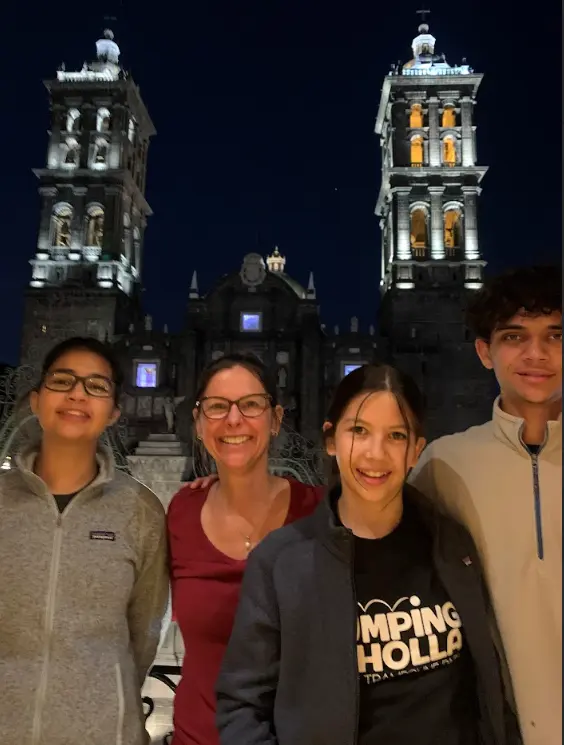
Image 2: Shelley and Kids in Puebla, Mexico
Funding applications are a unique genre and no one’s native language. Find examples of successful (or unsuccessful) applications and do a discourse analysis of them. How are they organized? What tone is used? What kinds of vocabulary are used? Purdue OWL has a useful handout on genre analysis that can be a helpful guide to analyzing fellowship examples (Kennell, 2020). One of my most helpful conversations was with someone who had previously reviewed Fulbright applications and helped me better understand how to frame my proposal.
3. Build Your Team
Applying and going to another country is not an individual endeavor. Build a team of support as you undergo the application process. You will likely need letters of recommendation, possibly a language evaluation, and people to help you understand the systems in the country that interests you. Building a network of support was critical to a successful application, and, even more importantly, essential to the transition and the work if you do receive the award.
If you work or study at a university, connecting with a study abroad coordinator is a great first step to begin building your team—even if you are not a student. Depending on the opportunity, the coordinator might be the best contact, or they can connect you to knowledgeable people who are willing to help.
I worked with the Fulbright program officer, the Fulbright liaison for my university, colleagues from Mexico, and colleagues from the U.S. who have worked in Mexico. My team helped me understand what “significant” meant when Fulbright asked for my “five most significant professional accomplishments.” The team helped me to connect my previous work to my proposed work and to prepare for the finalist interview.
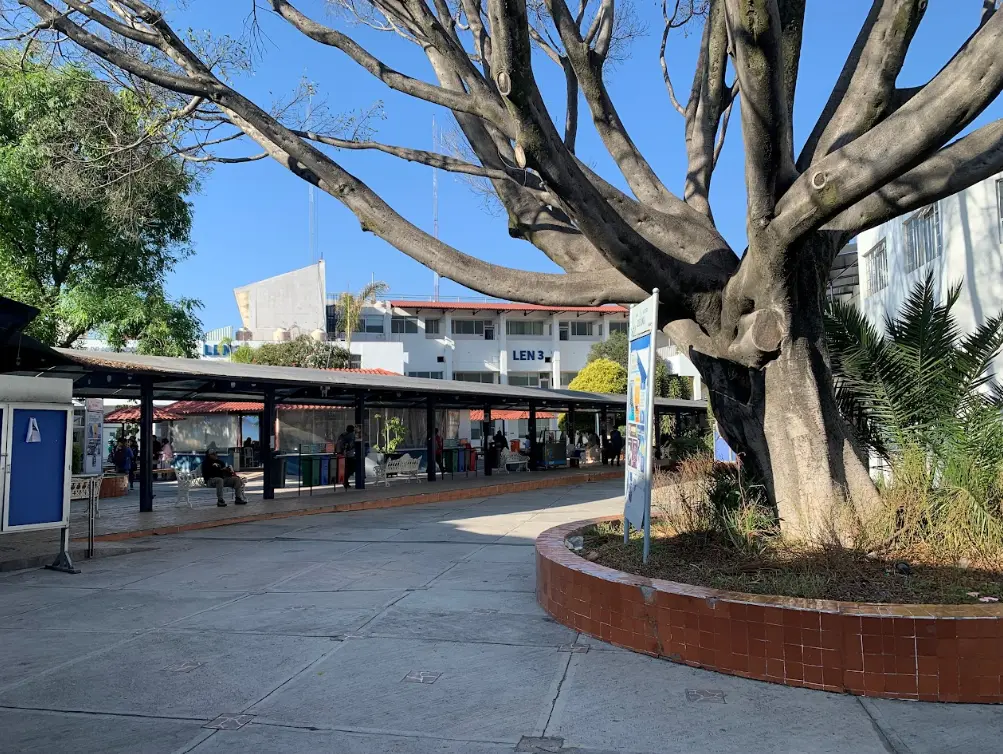
Image 3: The Facultad de Lenguas Where I Teach Some of My Classes
4. Procrastinate Early
I can procrastinate like no one’s business. I knew that I needed a way to procrastinate not until the final submission deadline, but until early deadlines that I set for myself. I told my director, who was also writing a letter of recommendation for me, that I would send her a draft two months before the Fulbright deadline. This early deadline served two purposes: it gave me time to get comments, and it gave her time to write a fantastic letter.
Setting a deadline two months early and making sure that the deadline meant something to me (I respect my director and want to fulfill my commitments to her) gave me time to get a lot of comments on my draft. The early deadline gave me time to request feedback from colleagues and friends. Additionally, a student who was on a Fulbright fellowship learned I was in the application process and offered to give feedback. I tailored my questions for each reader: With my director, I asked if my project was clear and the organization made sense; when my student read the document, I asked if she felt the Fulbright priorities were met. I got different kinds of feedback, but I made sure to remember that this was my application, and deciding when to accept comments and when to decline them depended on my own priorities in doing the proposed work. The application needed to be an honest reflection of me and the work I would be able to do.
Another benefit of procrastinating early was that it gave me time to make sure I had completed all the required documents. When I went back into the submission system to make sure that I had addressed all the questions asked prior to sending my draft to my director, I realized that I had missed a series of short-answer questions. Fortunately, I still had two months to write and rewrite those responses.
I told the people who wrote letters of recommendation for me that I would submit my materials a week early. By doing this, my letter writers knew that they were the only remaining element I needed to finalize my application. Submission portals are often not particularly friendly places. I was glad to not have last-minute pressure to finalize my submission, and I recommend that you find ways to complete the application prior to the deadline.
5. Submit and Resubmit
Funding is competitive. On my first submission, I felt good about my application, and I was pleased to get an interview for the fellowship. I had been working with the Spanish tutor and prepared extensively for the interview. I felt the interview went well, and afterwards I was cautiously optimistic. When I got the email of rejection, I was disappointed.
Despite the disappointment, I knew from my work with students that rejection is part of applying to funding, and I decided to apply a second time. I refined my application, requested letters of recommendation again, did another language evaluation, resubmitted the application, and began the long wait for a decision. A few months into the wait, I got quite sick with the flu and didn’t receive the email requesting an interview until two days prior. Because I was sick, I almost declined it; at that point, I did not want to go anywhere. I was not impressed with my own responses in the interview, but I patted myself on the back for trying and went back to bed. I could not believe my eyes when I received the email of acceptance as a Fulbright Scholar.
A Wealth of What Matters
Everyone in SLW is busy. With all the usual pressures of work and life, I did not know how I would fit preparing for an international move for three teenagers and myself into my life. But this change was exactly what I needed—and what my family needed. The experience has reminded me that a career in teaching is the absolute best work in the world, providing a life rich in engagement, relationships, and continual learning. Going from one-hour classes in the U.S. to three-hour classes in Mexico has given me the space to remember the centrality of relationships in teaching and learning. I have discovered new ways to use templates for second-language learners. I have made new friends. If you have considered applying for an international fellowship, I encourage you to submit the application. While a fellowship to work abroad will not provide an abundance of money, it will provide a wealth of what really matters in life.
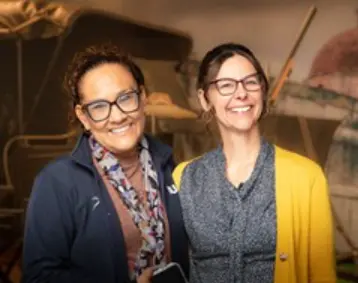
Image 4: My Wonderful BUAP Colleague, Veronica, and Me
Dr. Shelley Hawthorne Smith is an Associate Professor of Practice and Associate Director of the Graduate Writing Lab at the University of Arizona. She is currently spending Spring 2026 with her family in Puebla, Mexico as a Fulbright Scholar with the Benemérita Universidad Autónoma de Puebla (BUAP).
References
Deans, T. (2021, September 27). Another way to connect across borders: Consider a Fulbright. Connecting Writing Centers Across Borders.
https://wlnconnect.org/2021/09/27/deans-fulbright-1/
Kennell, V. R. (2020). Questions for genre analysis. Purdue Online Writing Lab (OWL).
https://owl.purdue.edu/owl/graduate_writing/documents/ Questions-for- Genre-Analysis.pdf
Editorial note: The views expressed in this article are those of the author and do not necessarily reflect the views of the SLW Interest Section or TESOL International Association. The SLW Interest Section does not endorse the programs described.