

From Processing to Production: A Structured Input Toolkit for Grammar-for-Writing Instruction
Yunqing (Vera) Xie, University College Dublin, Ireland
Personal Reflection
As a doctoral researcher in higher education, I was largely taught through mechanical output practice, which pushed me to focus on grammar rules and memorisation. However, Rule learning is a limiting approach to L2 learning. As a complicating factor, there are natural cognitive limitations which make comprehension difficult. Because of those cognitive limitations, learners may misinterpret sentence meaning and fail to build accurate form–meaning connections, which can in turn affect later production, including writing. For example, when learners encounter passive or causative constructions (form), they may incorrectly interpret the first noun as the agent (incorrect form-meaning connection) of the sentence and fail to derive accurate meaning from sentence structure. This is precisely why input-based support matters: before learners are asked to write with such structures, they may first need help interpreting them more accurately.
From the perspective of input processing theory, input matters: learners need opportunities to process language accurately before they are expected to produce it accurately. Although writing is a form of output, research suggests that writing development benefits from prior support during the input phase. Research grounded in Input Processing Theory (VanPatten, 1996) has helped me better understand how language processing and language production interact. In particular, it has shown me that Structured Input can build an important foundation during the input phase, while Structured Output can help learners apply that knowledge into later production.
Structured Input refers to meaning-based interpretation activities that require learners to attend to a target form while understanding sentence meaning. Structured Output, in turn, refers to meaning-based production activities that guide learners to use that form while expressing meaning, rather than through traditional mechanical output practice. In other words, when learners struggle to interpret structures such as passives or causatives accurately, Structured Input can first help them process these forms for meaning, and Structured Output can then help them carry that knowledge into production.
This article is most relevant to higher education writing classrooms for multilingual learners, especially when students experience recurring grammatical difficulties in writing. It proposes an effective intervention in which Structured Input serves as a foundation and Structured Output is used as follow-up under the framework of remedial approach.
Summary of Key Literature
In everyday writing instruction, multilingual writers may experience sentence-level problems. For example, when dealing with passive or causative constructions, learners may misunderstand who is doing what to whom, and similar difficulties may later appear in their writing. Therefore, one of the aims of writing instruction should help learners overcome these recurring grammatical difficulties. These problems may derive from inaccurate form–meaning connections during comprehension in the input phase. The studies reviewed below are especially relevant because they address this kind of difficulty, where problems in comprehension later appear in writing. Within the remedial approach, Structured Input and Structured Output can be used as a targeted response to these problems once the source of the grammatical difficulty has been identified.
Zhong and Benati (2024) investigated the effects of Structured Input on learners’ interpretation and production of the English passive causative construction. Their study compared two types of Structured Input Activities: referential activities, which guide learners toward one correct interpretation, and affective activities, which ask learners to respond to the content in a more personal way. The findings suggest that Structured Input may be a useful response to recurring grammatical difficulties in writing, with referential activities appearing to play the stronger role. This is why the practical activities presented later begin with referential tasks before moving to affective tasks.
Benati (2025) examined how L2 learners process passive sentences in real time. The results suggest that Structured Input may help reshape learners’ processing habits during the input phase, which may in turn lead to more efficient and accurate production. This is particularly relevant to grammar-for-writing instruction within a remedial framework, as more accurate writing may depend on more effective processing of target forms during comprehension. This study points to a relatively new and still developing idea: Structured Input may also help learners develop more accurate processing behaviour, and therefore its effects may extend beyond one target structure and support learners when they encounter similar grammatical difficulties, which may in turn contribute to more accurate production. In practice, this kind of transfer is limited but not general. It may occur when different structures are affected by the same or similar processing strategy, which means the non-optimal default processing strategy of L2 learners. Usually, learners tend to process the first noun of a sentence as the agent of a sentence, often discussed as the First Noun Principle. For example, when learners receive Structured Input on English passive construction, they may change their processing behavior on non-canonical structures, and then apply it to other structures such as English causative construction, where the first noun is not always the agent.
Batziou (2017) compared the effects of Structured Input, Structured Output, and their combination on English causative structures. Across three experiments, the results consistently showed that groups receiving Structured Input, either alone or in combination with Structured Output, outperformed the Structured Output-only group in interpretation and discourse-level production, and these gains were retained over time. While Structured Output contributed to some sentence-level gains, it was not sufficient on its own to produce durable improvement at discourse level. For grammar-for-writing instruction, these findings suggest that Structured Input can provide an important foundation, while Structured Output also plays a valuable role in helping learners extend these gains into production. In this sense, Structured Output is most effective when used as a follow-up to Structured Input rather than as a stand-alone instructional option. This sequencing is reflected later in the article, where Structured Output is introduced only after Structured Input.
Implications for Writing Instruction
1. How to Use Structured Input and Structured Output Within a Remedial Approach
A remedial approach usually begins with diagnosing the specific grammatical difficulty that learners are experiencing in writing. When learners repeatedly experience difficulties with passive constructions, instructors need to consider why these problems occur and identify their source. In this article, different target structures are linked to different processing problems. If learners tend to interpret the first noun as the agent, the problem is likely to be related to the First Noun Principle, and Structured Input should then focus on helping them assign grammatical roles more accurately during comprehension. By contrast, if learners repeatedly struggle with past tense marking, the problem may be more closely linked to the Primacy of Meaning Principle, because learners may prioritise lexical meaning and overlook tense marking. In that case, Structured Input should be designed to direct learners’ attention to the target tense form and its meaning.
This article does not claim that Structured Input and Structured Output can address all grammatical errors in writing. Rather, it is most relevant to recurring grammatical difficulties that are linked to input processing problems. In particular, it is especially useful for structures in which learners struggle to build accurate form–meaning connections, such as passive and causative constructions, or for grammatical forms that are easily overlooked when meaning is prioritised, such as tense marking. Figure 1 illustrates how Structured Input and Structured Output can be used within such a remedial approach.
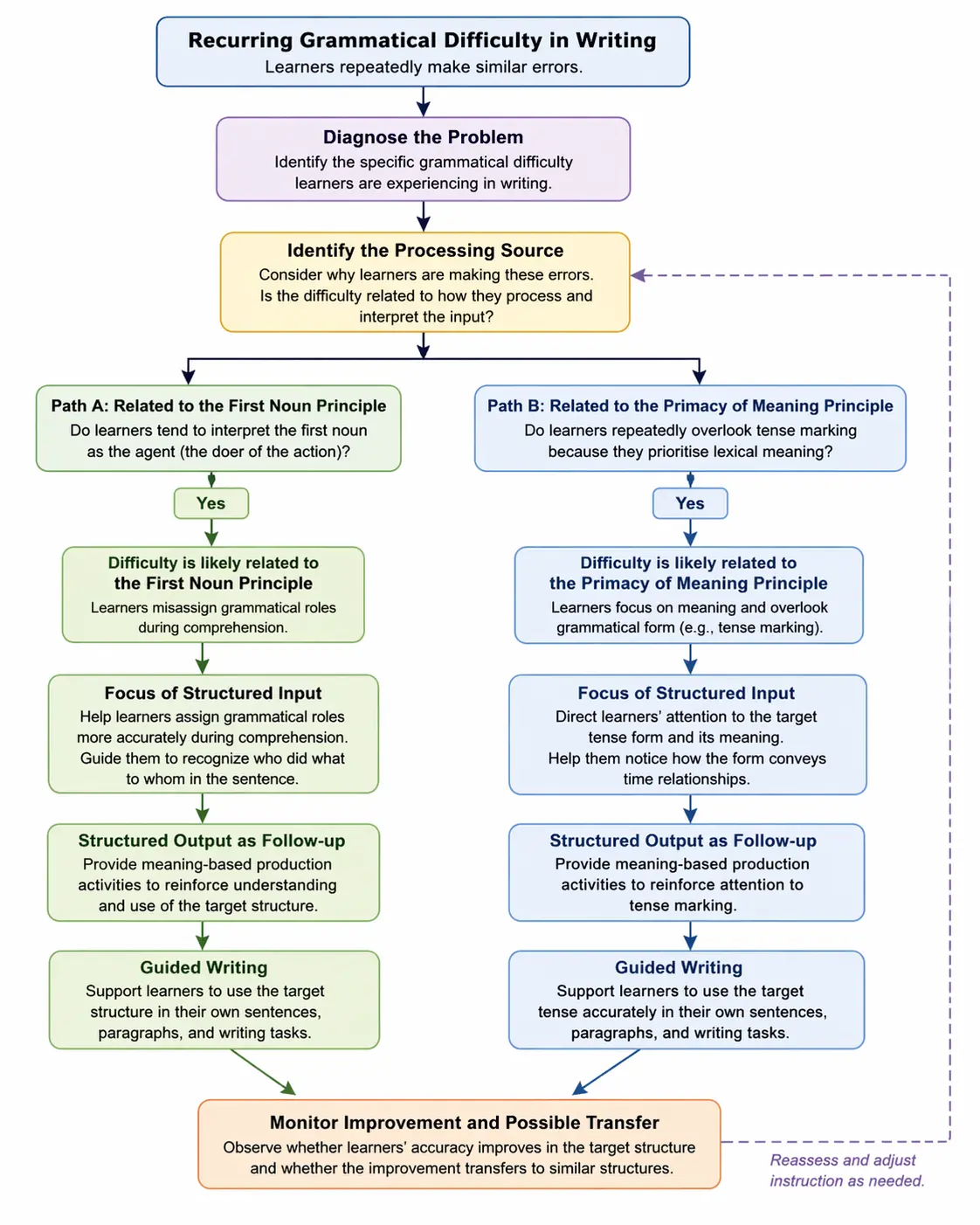
Figure 1: Sequencing Structured Input and Structured Output Within a Remedial Approach
2. How to Design and Sequence Structured Input Activities
Figure 2 summarises the guidelines for developing Structured Input activities originally proposed by Lee and VanPatten (1995).
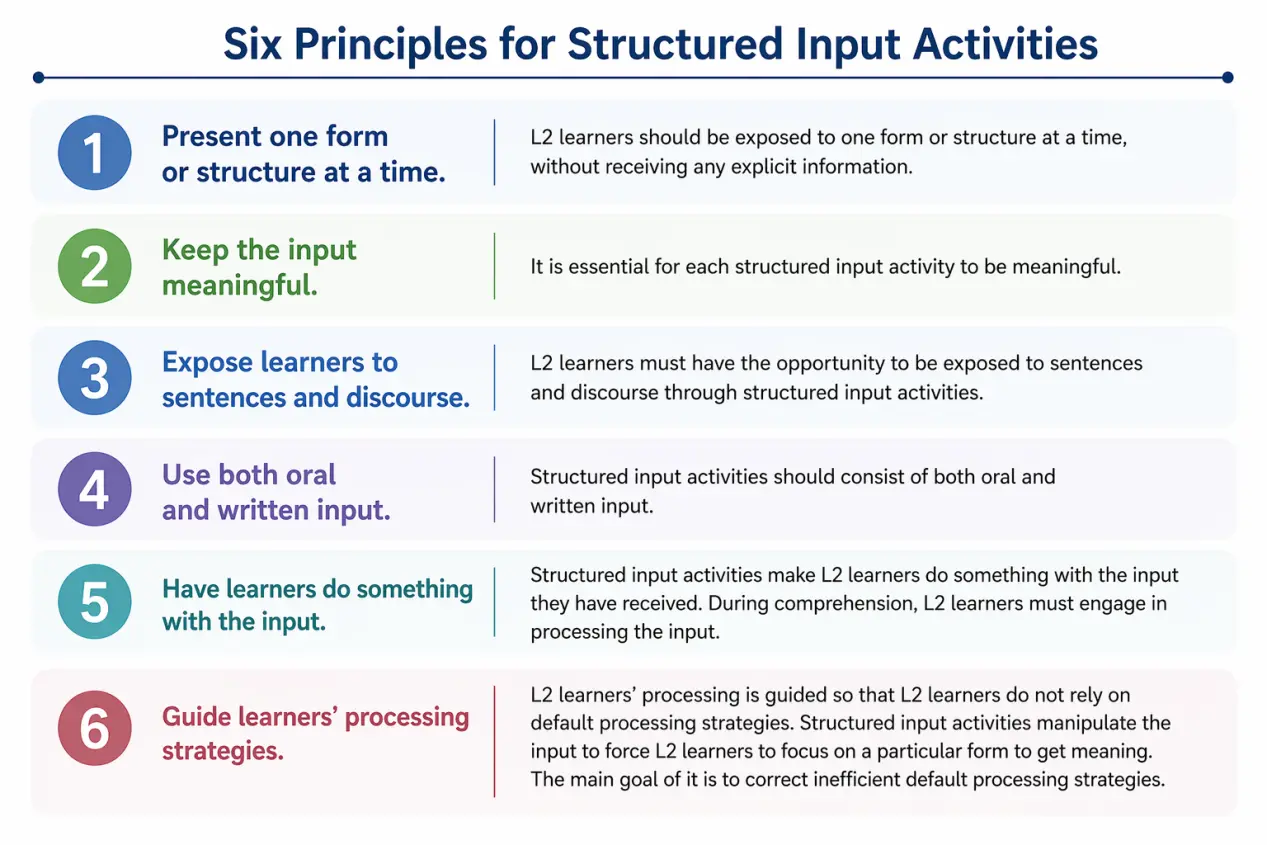
Figure 2: Six Principles for Structured Input Activities, Based on VanPatten (1995)
Further, Zhong and Benati (2024) suggest that not all Structured Input activity types contribute equally. Referential activities appear to play the central role in helping learners process language accurately, while affective activities are better used as a supporting component. For this reason, referential activities are best introduced first, followed by affective activities as a later supporting component.
Figures 3 and 4 provide sample Structured Input activities for writing based on the causative construction, including both referential and affective tasks.
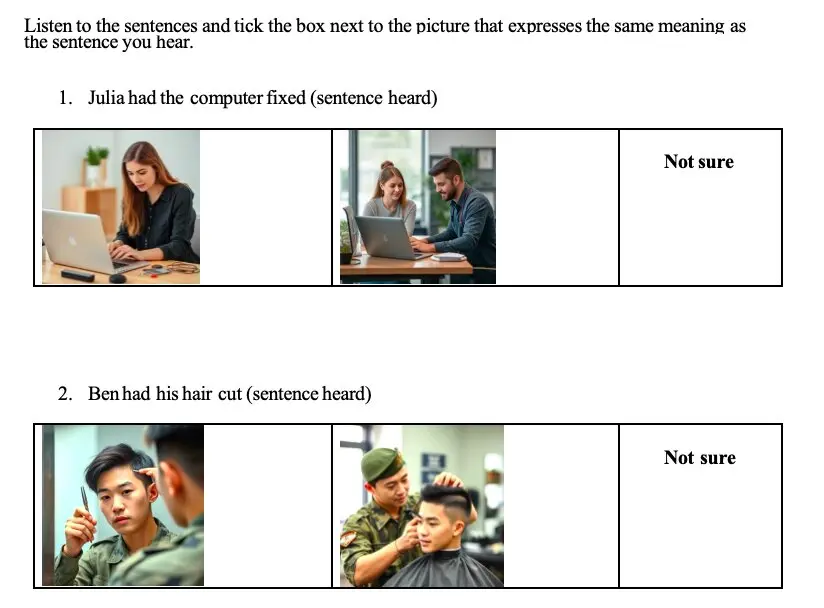
Figure 3: Referential Structured Input Activities
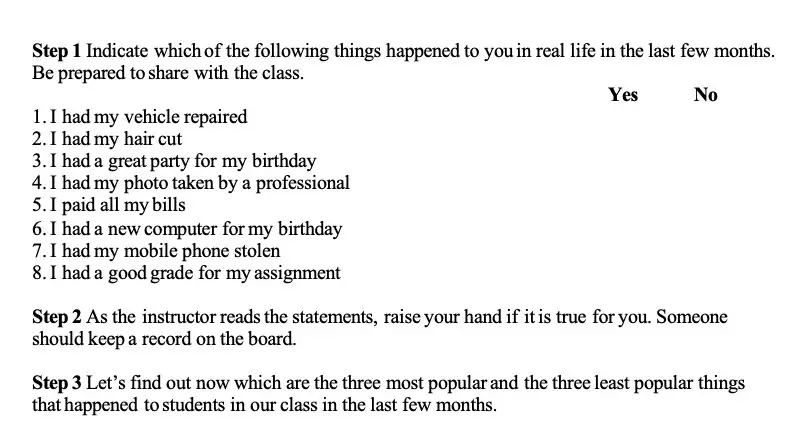
Figure 4: Affective Structured Input Activities
3. How to Design Structured Output as Follow-Up in Writing Instruction
SLW instructors may first use Structured Input to help learners move away from ineffective processing habits and build more accurate processing strategies, and then use Structured Output as follow-up to extend these gains into production.
Structured Output activities should be developed in close accordance with the guidelines proposed by Lee and VanPatten (1995). Like Structured Input Activities, they should present one thing at a time, keep meaning in focus, move from sentences to connected discourse, and involve both oral and written language. However, Structured Output differs in two important ways. First, the output should contain a meaningful message, and other learners should respond to its content, for example by comparing information or taking notes. Second, learners should already have some knowledge of the target form or structure, which means that Structured Output is most appropriately used after Structured Input. The sample Structured Output activities presented in this article are organised into four steps designed to encourage learners to produce both oral and written output.
Figure 5 presents a sample Structured Output activity for writing based on the causative construction.
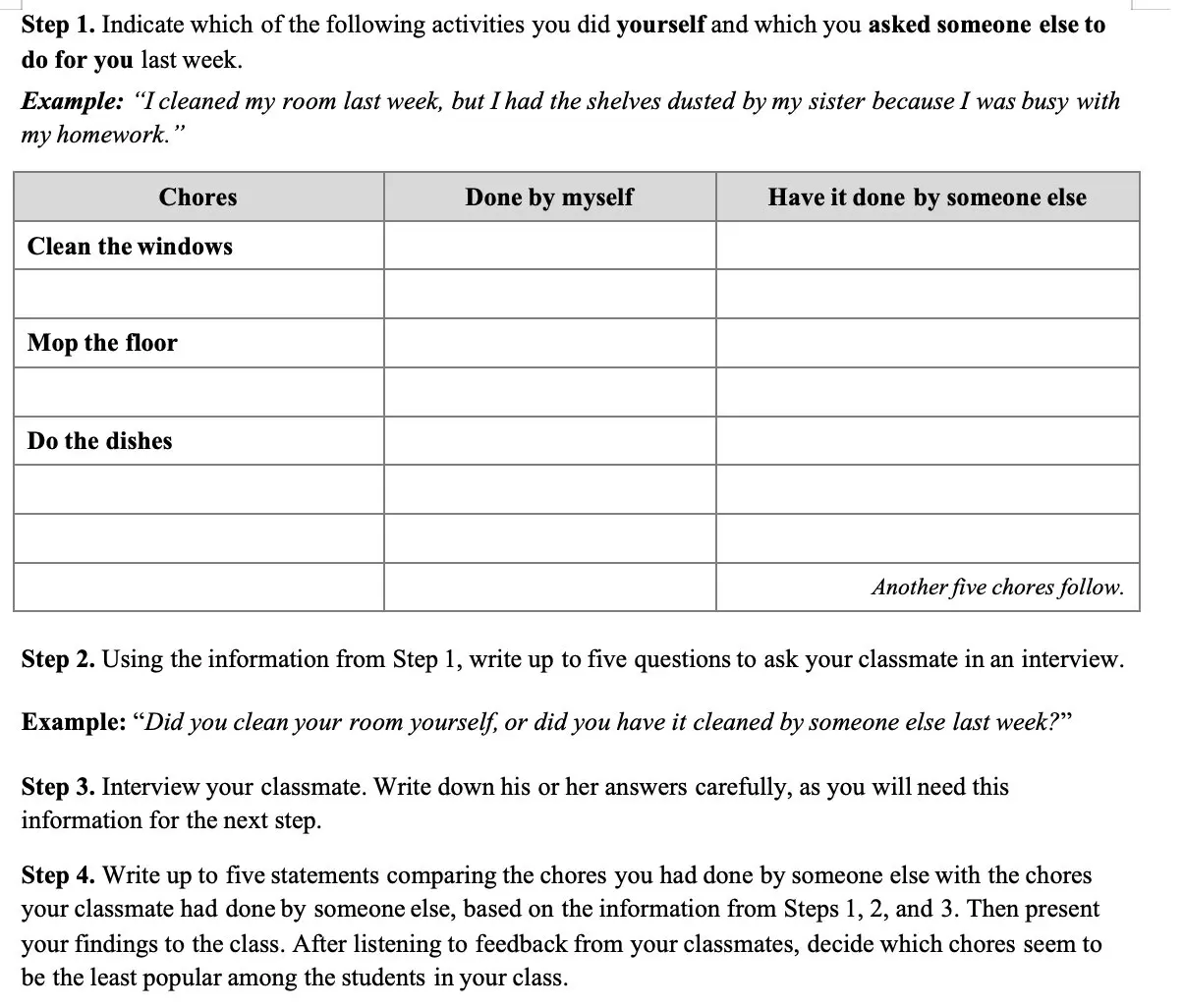
Figure 5: Sample Structured Output Activity
Conclusion
Grammar-for-writing instruction aims to help learners address recurring grammatical difficulties in writing. Within a remedial framework, structured input and structured output work together to help L2 learners become more accurate processors and producers of language. Their effects may also be long-lasting, as Structured Input aims to support changes in learners’ processing behaviour rather than short-term rule use only. Such changes may also help learners process structurally similar forms that create similar processing problems.

Yunqing Xie is a doctoral researcher in the School of Education at University College Dublin (UCD), Ireland. Her work focuses on developing and evaluating Structured Input as a pedagogical intervention to help multilingual writers improve grammar-for-writing, as well as sentence and discourse-level accuracy and efficiency.
References
Batziou, M. (2017). Measuring short- and long-term effects of isolated and combined Structured Input and Structured Output on the acquisition of the English causative form at sentence and discourse level [Doctoral thesis, University of Portsmouth]. University of Portsmouth Research Portal. https://researchportal.port.ac.uk/en/studentTheses/measuring-short-and-long-term-effects-of-isolated-and-combined-st/
Benati, A. (2025). Accuracy and response-time effects of Structured Input on the acquisition of English passive and active constructions: A self-paced reading study of native and non-native processing behaviours. Language Teaching Research. Advance online publication. https://doi.org/10.1177/13621688251329670
Lee, J. F., & VanPatten, B. (1995). Making communicative language teaching happen. McGraw-Hill.
VanPatten, B. (1996). Input processing and grammar instruction in second language acquisition. Ablex.
Zhong, Z., & Benati, A. G. (2024). An investigation into the effects of Structured Input, referential activities, and affective activities on the acquisition of English causative forms. Languages, 9(2), 39. https://doi.org/10.3390/languages9020039