
Letter From the Editors
Stefan M. Vogel, University at Albany, SUNY, USA
Bakheet S. Almatrafi, Umm Al-Qura University, Saudi Arabia
Ryan J. Good, Association of International Cultural and Educational Exchange, Taiwan
Dear SLWIS members,
We are incredibly excited to present the Spring 2026 issue of SLW News! We are proud to share that we are becoming more intentional about creating the newsletter as a space for the diverse voices from our SLW community across geographical regions, education levels, and marginalized groups. You will notice that in this issue, contributions come from the Middle East, from a transnational context bridging southern Arizona and Mexico, and from several locations across Europe. We will continue to build on this effort of diversifying and broadening the perspective of SLW News!
Over the past few months, we have been busy revising and rebuilding our submission categories of the newsletter, and the fully revised submission categories will launch with the Fall 2026 issue. To start, we introduced the Reader’s Forum as well as Professional and Creative Insights in our call for the Spring 2026 issue, and we are happy to share that we have received two exciting contributions with practical tips for professional growth and well-being! In this issue, we are also introducing the Academic Session Report, which includes a synopsis of the event at the 2026 TESOL convention, written by the panel moderator, Ali Yaylali, as well a short summary of each presentation provided by the session participants. We hope this new format will be of interest and value to those who were not able to attend the in-person convention in Salt Lake City this year.
Our current issue features a letter from our past chair, Andy Liu, with updates on our spring activities, including the inaugural SLWIS Research Symposium for Aspiring Scholars and the TESOL Convention, where our highly successful Intersection and Academic Sessions brought TESOL members and SLW folks together. Andy’s letter also includes the slides from our annual business meeting and leadership updates for the 2026-27 Steering Committee. You will find a second letter by our new chair, Ali Yaylali, in this issue, outlining the Interest Section’s priorities and strategic goals for the coming year and extending another welcome to our new 2026-27 leaders.
In our Bridging Research and Pedagogy section, Yunqing (Vera) Xie (University College Dublin, Ireland) explores grammar-for-writing instruction for multilingual learners in higher education writing classrooms. The article suggests that inaccurate form–meaning connections during comprehension may affect later production, including writing. It therefore offers practical task ideas using Structured Input as a foundation and Structured Output as a follow-up under the remedial approach framework.
In the Technology-Enhanced Language Learning section, J. T. Salita (University of Bremen, Germany) discusses how writing a scientific proposal with the use of an AI tool was guided and implemented in an EFL Scientific Writing Classroom she taught at the University of Bremen’s Language Center. The article documents how AI literacy and academic integrity were handled in class. It also gives a summary of student feedback and the implications for training EFL students’ writing skills in the future.
In the Professional and Creative Insights section, Shelley Hawthorne Smith (University of Arizona, USA) provides a step-by-step guide to applying for funding to work in another country. The article summarizes the application process from looking for funding to applying and encourages readers to take advantage of the opportunities our field provides.
Another piece in the Professional and Creative Insights section is by Gabrielle Smith (University of Vienna, Austria), in which she examines teacher wellbeing in SLW–a field increasingly shaped by AI and institutional pressure. The article introduces the 7 Pillars of Educator Vitality and two practical rubrics, framing SLW teacher wellbeing not as a luxury, but as the foundation for vibrant and sustainable writing instruction.
In our Meet the Experts interview, Dua Jabr Dajani (Ministry of Education & David Yellin College of Education, Israel) shares insights from her work supporting EFL instruction and teacher development in East Jerusalem. She discusses the challenges of teaching English in a context where exposure to the language is largely limited to the classroom and emphasizes the importance of identity-affirming, critically engaged instruction. Dajani highlights second language writing as a means for students to develop voice, confidence, and critical thinking through purposeful planning, drafting, and reflection. She also reflects on initiatives such as “Speak Up,” where young learners use writing to organize ideas and communicate meaningfully. Throughout the interview, Dajani underscores the importance of teacher development, collaboration, and reflective practice in strengthening English education and expanding opportunities for learners. The interview was conducted by James J. Riley (U.S. Department of State English Language Programs, Portugal).
Finally, we would like to give a shoutout to our authors, the SLWIS leadership team, and all contributors to the SLW Interest Section who support our newsletter work and help us bring you a glimpse into the everyday work of the community’s members. We hope you enjoy reading the articles in this issue and will consider contributing to the SLW community with your practitioner and/or research experiences in the future.
Warm regards,
Stefan Vogel, Bahkeet S. Almatrafi, and Ryan Good

Stefan M. Vogel is a Lecturer at the University at Albany, SUNY, where he teaches in the Writing and Critical Inquiry program. He holds a PhD in Second Language Acquisition and Teaching from the University of Arizona. His primary areas of specialization are in second language writing, L2 teacher education, and program administration and leadership.
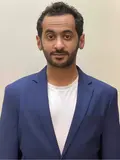
Bakheet S. Almatrafi is an Assistant Professor of Applied Linguistics at Umm Al-Qura University (KSA) and Chair-Elect for Second Language Writing Interest Section (SLWIS) of the TESOL International Association. He holds a PhD in Applied Linguistics from the University of Memphis, and his research focuses on second language writing, with particular attention to written corrective feedback, pedagogical translanguaging, and AI-mediated pedagogy.

Ryan J. Good is a TEACH Fellow with the Association of International Cultural and Educational Exchange in Taiwan. He holds a Master’s in TESOL from the University of Maryland, Baltimore County and preK-12 TESOL licensure from the State of Maryland. He has spent the last 15 years teaching English abroad in Indonesia, Uzbekistan, and Taiwan.