
Letter from the Chair
Huseyin Uysal, The Education University of Hong Kong
Dear B-MEIS Members, Colleagues, and Friends,
It is with great excitement and renewed commitment that I welcome you to the first issue of the Bilingual-Multilingual Education Interest Section (B-MEIS) newsletter. As your Chair, I am honored to represent an international community of educators, researchers, and advocates committed to fostering equity and excellence for multilingual learners across educational settings. This year, we take bold steps forward in advancing our mission to support, elevate, sustain, and transform multilingual education at a time when it is both critically needed and persistently challenged.
Our updated mission statement, adopted on June 1, 2025, underscores our shared belief that multilingual learners’ full communicative repertoires are not simply valid but essential to holistic literacy development, global citizenship, and equity. In a time of rising nationalist discourses and anti-immigrant sentiment that seek to re-marginalize linguistic and cultural diversity, our collective advocacy must remain steadfast. As educators on the frontlines, you play a pivotal role in transforming ideologies and practices in your classrooms.
This year, our team proudly presents six globally-engaged webinars, each led by scholars whose work centers the linguistic and cultural wealth of multilingual learners. Topics include metalinguistic awareness, critical language ideologies, funds of knowledge, translanguaging frameworks, crisis pedagogy, and anti-racist storytelling, each carefully curated to support your classroom practice and professional growth. Our speakers are Anna Krulatz, Curtis Green-Eneix, Pramod Sah, Laura Hamman-Ortiz, Marianne Rachel Perfecto, Kirti Kapur, Laura Liu, Nahal Rodieck, Grace Mavhiza, Daniela Searle, Clara Vaz Bauler, and Ching-Ching Lin. Collectively, the webinars speak directly to the heart of B-MEIS’ work: leveraging multilingual learners’ identities, epistemologies, and repertoires as tools for transformation, not as barriers to overcome.
As educators, we know that every pedagogical choice is ideological. Whether we choose to recognize our students’ full language practices or suppress them in favor of “standard” expectations reflects our stance on equity and justice. The research is unequivocal: Translanguaging is not merely a strategy. It is a pedagogical stance, a political act, and a pathway to liberation. As García and Kleifgen (2020) and García and Leiva (2014) remind us, translanguaging reclaims student agency, disrupts linguistic hierarchies, and creates the conditions for culturally sustaining education.
In a recent piece that I co-authored with Zhongfeng Tian, we argued that translanguaging must be understood as a socio-cognitive-political framework (Uysal & Tian, 2025). It redefines language not as separate named systems, but as fluid practices that reflect how students navigate the world. Translanguaging is an act of resistance in classrooms where linguistic minoritization persists, and where policy and practice often prioritize “English-only” ideologies that erase student identities.
This is not an abstract concern. In classrooms across the United States and globally, students are increasingly subjected to standardized assessments and reclassification policies that position them as perpetually deficient. As I argued further in Uysal (2024), such systems not only misrepresent multilingual learners’ capacities, but also perpetuate racialized, classed, and linguistic marginalization.
So, what can we do? As teachers, we must adopt an equity-seeking translanguaging orientation (Uysal & Tian, 2025). This orientation rests on three pillars:
- Stance: Believe that your students’ multilingual practices are not only legitimate but powerful. This belief transforms classroom culture.
- Design: Plan instruction that invites students to draw on all their languages through bilingual texts, multilingual discussions, and cross-linguistic analysis.
- Shifts: Be ready to adapt in the moment, responding to how students use their full repertoires to make meaning and co-construct knowledge.
Echoing the insights of García and Uysal (2024), this approach shifts us away from the deficit logic of language separation and toward an understanding of language as a human practice that is relational, dynamic, and deeply rooted in identity. As I have written elsewhere, it is not about requiring teachers to speak every student’s language. Rather, it is about creating pedagogical spaces where all students feel heard, seen, and empowered to draw on their own linguistic strengths (Uysal, 2024).
Our work at B-MEIS reflects a commitment to global multilingualism. This year, our presenters join us from various countries including the United States, Spain, South Africa, Norway, Hong Kong SAR, India, and the Philippines, which is a diversity that reminds us that advocacy for multilingual learners is a transnational project. By building coalitions across borders, we fortify our resolve and learn from one another’s contexts and strategies.
As we move forward, I invite you to ask yourselves:
- How can I make space for translanguaging in my classroom, whether through writing, discussions, or assessment?
- What assumptions about language “proficiency” am I ready to challenge?
- How can I be an advocate for inclusive language policy in my school, district, or university?
This is a critical moment for multilingual education. But I remain deeply hopeful—because of you. Your work matters. Your classroom is a site of possibility. And through intentional practice, critical reflection, and community, we can transform educational spaces to reflect the rich linguistic lives of our students.
On behalf of the 2025-2026 B-MEIS Team, thank you for your continued support. I encourage you to register for our upcoming webinars, engage with our newsletter, and share your insights with our growing network. Let us sustain the momentum of advocacy together.
With solidarity and respect.
References
García, O., & Kleifgen, J. A. (2020). Translanguaging and literacies. Reading Research Quarterly, 55(4), 553–571. https://doi.org/10.1002/rrq.286
García, O., & Leiva, C. (2014). Theorizing and enacting translanguaging for social justice. In A. Blackledge & A. Creese (Eds.), Heteroglossia as practice and pedagogy (pp. 199–216). Springer. https://doi.org/10.1007/978-94-007-7856-6_11
García, O., & Uysal, H. (2024). A conversation with Ofelia García: Critical perspectives on translanguaging and adolescent English learners. RELC Journal, 55(1), 274–284. https://doi.org/10.1177/00336882241229249
Uysal H. (2024). Sustaining the momentum of advocacy for multilingualism: Insights from the second issue. Journal of Education for Multilingualism, 1(2), 165–168.
Uysal H., & Tian, Z. (2025). Toward equitable classrooms: Translanguaging for adolescent emergent multilinguals. Linguistics and Education, 86, Article 101404. https://doi.org/10.1016/j.linged.2025.101404
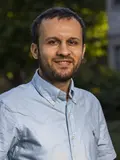 Huseyin Uysal is a Research Assistant Professor in the Department of English Language Education at The Education University of Hong Kong. He holds a PhD degree in Curriculum and Instruction with a specialization in ESOL/Bilingual Education from the University of Florida. His scholarship is driven by the values of social justice and grounded in understanding power, identity, and inclusivity in linguistically and culturally diverse schools. His work has appeared in venues such as TESOL Journal, TESOL Quarterly, Linguistics and Education, and Peabody Journal of Education. He is currently serving as the Editor-in-Chief of Journal of Education for Multilingualism, and the Associate Editor of Journal of Education, Language, and Ideology.