
Communications Strategies for International Students
Constance A. Leonard, United States Air Force Academy, USA
English for Academic Purposes
It is common knowledge that one of the biggest fears of college students is public speaking. According to Grieve et al. (2021), a survey of students from two UK universities, found the highest number of students (80%) reported that oral presentations were a source of social anxiety impacting on learning and well-being. Public speaking is a common fear selected by US college students (61%) and ranks second in the top three concerns, behind death and financial problems. Two courses at the United States Air Force Academy (USAFA) are offered to both semester-exchange and 4-year exchange international cadets that emphasize public speaking. The primary communication outcome of both courses is to train cadets to employ effective delivery techniques such as posture, gesture, eye contact, vocal expressiveness and body movement to make a presentation compelling.
The first is an English for Academic Purposes (EAP) semester-long course with a focus on academic reading, writing, and public speaking. The theme of the course is War, Occupation, Culture, and Migration, so all speaking activities are related to preparing students for their current and future roles as officers. However, any of the speaking activities can be adapted to a variety of levels and themes. During the entire course, students are given low-stake opportunities to speak in small groups, in front of the entire class and finally in a public forum where students, staff, and faculty are invited. Classes do not exceed 20 and after classmates get to know one another, they are quite comfortable speaking in front of the class. However, preparing to speak in a larger venue of 60 to 80 attendees takes an immense amount of preparation. In her article, “The Problem of Presentations: An EAP Lecturer’s Approach to Teaching Presentation Skills,” Jodie Martin (2023) asserts “A key challenge is ensuring that students are assessed on what they have been taught explicitly and not on conforming to an assessor’s cultural or cultivated expectations.” To address this issue in my EAP courses, I model presentations, have them reflect on and share effective speeches they have attended, and show them videos of final presentations from the previous year. We then analyze these, looking at content, organization, verbal and non-verbal delivery and visuals if there are any. Martin (2023) finally sums up that there are two types of preparation: “practice as part of preparation, and practicing to polish.” By giving students ample opportunities to practice during class time and for homework, they will produce a smooth delivery and reduce the fear they may have of public speaking.
Some of the small-stakes activities for this course include introducing one another and their countries on the first day of class. Students interview each other in pairs from a list of topics they generate, which often includes favorite sports, music, hobbies, country, the meaning of their name, and descriptions of their military academies’ education and training. Over the course of the semester, they are assigned 10 journal entries, which are often related to the war literature that they are reading, but there are others where they share personal narratives, what they are going to research for their final presentation and an analysis of historical photographs. In their first assignment, students write about their first impression of arriving in the United States. At the beginning of the following class, I ask for volunteers to stand in front of the classroom and share their journal entries. As the semester progresses, more students volunteer and by the end of the course, everyone has presented their journals at least five times. Additional speaking opportunities include group discussions on our readings, creative interpretations of passages combining words and music, role-plays, and dramatic readings in groups.
For their final presentation, the students present either their research or conduct a cultural presentation on their military academy or country. Last year’s presentations included these topics: The Cultural Diversity of Brazil, French Culture and its Influence in the U.S., Can Colonization be Justified?, Poland: Europe’s Next Military Superpower, and Japanese Internment and its Long-Term Effects in Canada, among others. Prior to this, students have received explicit instruction throughout the semester on presentation techniques. They have also had time in class to prepare and practice while timing each other, and they can make group and individual appointments with their instructors. Finally, we have a Public Speaking Lab where they can make individual and group appointments and be coached by one of our two full-time Public Speaking Specialists.
Communication Strategies
The second course, Communication Strategies, is a half-semester course offered to both international and US students in separate sections. This course focuses on developing effective reading and public speaking strategies. As in the EAP course, students participate in low-stakes activities before they are assessed on two formal speeches. These include table talk activities such as debates at their tables or standing in a circle, discussing cultural artifacts that I have collected from different countries, fortune cookies and impromptu, which can be generated online. Students are then offered the opportunity to share what they talked about in front of the class. As the students gain confidence, they participate in additional activities by giving formal military briefings in groups, role-playing commanders and officers. To increase their comfort levels, they put their notes on a podium, and this simulates an authentic military briefing.
The students have two graded major speeches, the first of which is an introductory speech using an artifact to introduce themselves to the class. For example, one student brought in her sketchbook and used it as a vehicle to talk about her passion for art. The subjects of her drawings, the style, and the colorful drawings gave the class a deeper and more intimate understanding of her. In fact, most of the students, when giving feedback, appreciated the personal stories that normally wouldn’t be brought up in an academic class. Other students presented photos as artifacts, for example, their pets, neighborhoods, and family photos. Other artifacts included high school graduation presents such as a special watch, a leather planner inscribed with the students’ name, and a childhood blanket. Students had two minutes for the introductory speech and classmates took videos of the toast using the speaker’s phone. A follow-up assignment required the students to view their video and write a short journal analyzing their own performance. As this was private, they were very honest with themselves and were normally perceptive as to what they should work on in future.
The second and final major speech was a toast. Students were shown examples from films and authentic toasts available on YouTube. They enjoyed being creative with these assignments and toasted their past and future graduations, cats, siblings, best friends’ future weddings, their mothers and fathers, and one for a New Year’s Eve party. Assessments were based on content, organization, verbal and non-verbal delivery, body language, and keeping to the time limit of between two and three minutes.
Excerpts from the Toast Speech
So, let’s raise our glasses to this class. May your futures be as bright as your laptop screens at 2 AM, your dreams be as bold as your choice to hit “snooze” one last time, and may you never run out of coffee—or good Wi-Fi! Here’s to new adventures, endless possibilities, and the wisdom to know when it’s time to put down the remote and get to work. Cheers!
If I could have your attention, I would like to propose a toast. As we gather here today to celebrate the beautiful union of Ana and her husband, let us raise our glass to their relationship which is filled with love, laughter, and a lifetime of happiness…Here's to the memories you'll create, the dreams you'll chase, and the love and joy that you’ll spread. Cheers!
Lessons Learned
In the future, I will require outlines or full speeches to be uploaded to our LMS. I do not have a written record of the artifact speeches other than my feedback and their own observations. These would have been useful as examples for incoming students. Although some did take advantage of the Public Speaking Lab, assigning extra credit might encourage more to utilize this resource. All in all, the results have been promising and I hope to keep refining the courses so that they remain useful and relevant to the students.
References
Grieve, R., Woodley, J., Hunt, S. E., & McKay, A. (2021). Student fears of oral presentations and public speaking in higher education: a qualitative survey. Journal of Further and Higher Education, 45(9), 1281-1293.
Grieve, R., Woodley, J., Hunt, S. E., & McKay, A. (2021). Student fears of oral presentations and public speaking in higher education: a qualitative survey. Journal of Further and Higher Education, 45(9), 1281-1293.
Martin, J. L. (2023). The Problem of Presentations: An EAP Lecturer’s Approach to Teaching Presentation Skills. BC TEAL Journal, 8(1), 29-42.
The views expressed in this article are those of the author and not necessarily those of the U.S. Air Force Academy, the U.S. Air Force, the Department of Defense, or the U.S. Government.
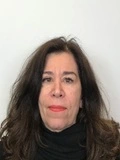 Constance A. Leonard teaches English for Academic Purposes, Communication Strategies, and Learning Strategies for international cadets at the United States Air Force Academy. She has taught and trained teachers in the United States, Cambodia, the United Arab Emirates, Greece, Egypt, and Yemen.