

Beyond Intercultural Competence: Introducing the RICN Model to TESOL Professionals
Vahid Ghorbani, Arak University, Iran
Why Move Beyond a Fixed Competence Profile?
Intercultural communication has long been shaped by influential competence-based frameworks. Byram’s (1997) model highlighted attitudes, knowledge, skills, and critical cultural awareness, while Deardorff’s (2006) process model showed how intercultural competence develops through attitudes, knowledge, internal change, and external behavior. These contributions remain foundational. Yet contemporary communication increasingly takes place in environments that are multilingual, digitally mediated, professionally specialized, emotionally demanding, and structured by different levels of risk and power. This creates a practical question for TESOL professionals: Is the same set of intercultural resources equally important in every interaction? The Intercultural Communication Needs (ICN) Model and Triple Needs Theory (TNT) approached this question by conceptualizing intercultural communication through three interconnected macro-needs: linguistic, affective/emotional, and cultural needs. Earlier studies showed that these dimensions work together and that their importance is influenced by contextual and individual factors (Ghorbani & Dowlatabadi, 2024, 2025). Comparative work also suggested that a needs-based perspective can complement established competence-oriented models by focusing more directly on what communicators require in real interaction (Ghorbani & Hassani, 2025). The RICN Model develops this idea further. It does not reject competence. Instead, it shifts the focus from possessing a general set of competencies to recognizing, prioritizing, and coordinating communicative needs as situations change.
What the RICN Model Adds
The revised model emerged from a qualitative study involving 100 participants from education, healthcare, business, and politics, with 25 participants representing each domain. Fifty participants took part in semi-structured interviews and 50 in focus-group discussions. Across the four domains, the findings pointed to communication demands that were not fully captured by broad competence descriptions alone. The linguistic dimension therefore extends beyond general language proficiency. It includes pragmatic competence, digital literacy, multilingual mediation, professional jargon awareness, and negotiation discourse. A speaker may know the vocabulary and grammar of English but still misunderstand indirect meaning, struggle with professional terminology, misread a message in a digital environment, or fail to negotiate meaning strategically. The affective/emotional dimension is also expanded. In addition to empathy, openness, and motivation, the RICN framework emphasizes emotional intelligence, emotional regulation, resilience, stress management, and crisis empathy. These resources become especially important when communication occurs under uncertainty, pressure, vulnerability, or conflict. The cultural dimension moves beyond knowledge of cultural differences. It incorporates power awareness, ethical responsibility, professional cultural codes, institutional culture, and a global mindset. This matters because communication is not always conducted between socially equal participants. Hierarchy, authority, professional norms, inclusion, and ethical responsibility can influence who speaks, whose interpretation is accepted, and how meaning is negotiated.
Why Domain Matters
One of the central ideas of RICN is that intercultural needs do not operate in a permanently fixed order. Their relative salience changes according to the communicator, the situation, and the professional domain. The study showed different patterns across the four domains. In education, participants emphasized clarity, emotional safety, accessibility, and participation. In healthcare, linguistic accuracy, empathy, consent-related clarity, and ethical awareness became particularly important. Business communication placed greater emphasis on negotiation, efficiency, trust, and organizational norms. Political communication foregrounded power, ideology, representation, and strategic discourse. These differences are important for TESOL because many learners use English for highly specific purposes. A student preparing for an international university classroom, a healthcare professional communicating with a multilingual patient, a manager negotiating with an overseas partner, and a public official participating in an international meeting may all require intercultural communication, but they do not necessarily require the same configuration of needs at the same moment. From this perspective, the key pedagogical question changes. Instead of asking only, “Does this learner have intercultural competence?” teachers can also ask, “What does this learner need to manage successfully in this particular interaction?”
What This Means for TESOL Classrooms
A needs-based perspective can make intercultural teaching more situational and actionable. First, teachers can design intercultural tasks around communication problems rather than cultural facts alone. Learners can analyze what is happening when a message is grammatically correct but pragmatically inappropriate, emotionally insensitive, professionally unclear, or culturally misaligned. Second, digital communication deserves explicit attention. Email, messaging platforms, video meetings, learning-management systems, and AI-mediated communication have changed how tone, politeness, turn-taking, repair, and misunderstanding are experienced. Digital literacy in RICN is therefore not simply technical ability; it is part of intercultural meaning-making. Third, emotional conditions can be treated as part of communicative performance. Learners may know what to say but be unable to use that knowledge effectively when they feel anxious, excluded, uncertain, or under pressure. Reflection activities, role plays, and debriefing can help learners notice how trust, empathy, stress, and emotional regulation influence interaction. Fourth, teachers can make power and professional culture visible. Classroom scenarios can include interactions between students and professors, patients and healthcare professionals, junior and senior employees, or clients and service providers. Such tasks help learners examine how status, institutional expectations, professional jargon, and ethical responsibilities shape communication. Finally, assessment can become more context-sensitive. Instead of evaluating intercultural learning only through general attitudes or knowledge, teachers can ask learners to explain which needs became most important in a scenario, how those needs interacted, and why a different context might require a different response.
Toward Intercultural Actualization
The RICN Model retains the idea that linguistic, affective/emotional, and cultural needs are interdependent, but it emphasizes that successful intercultural communication depends on how these needs are prioritized and enacted under real conditions. The aim is not to build a communicator who applies the same competence profile everywhere. It is to support a communicator who can recognize changing demands, adapt resources, negotiate meaning, and respond ethically and appropriately. This process can be described as intercultural actualization: the context-sensitive enactment of prioritized linguistic, affective/emotional, and cultural needs in ways that promote ethical, adaptive, and collaborative communication. For TESOL professionals, this perspective invites a shift from teaching intercultural competence as a stable destination toward preparing learners for adaptive decision-making across diverse encounters. The value of RICN, therefore, lies not in replacing earlier intercultural models but in adding another question to the field. Alongside asking what intercultural communicators should know, feel, and be able to do, we can ask: What do they need here, now, with this person, in this domain, and for this communicative purpose?
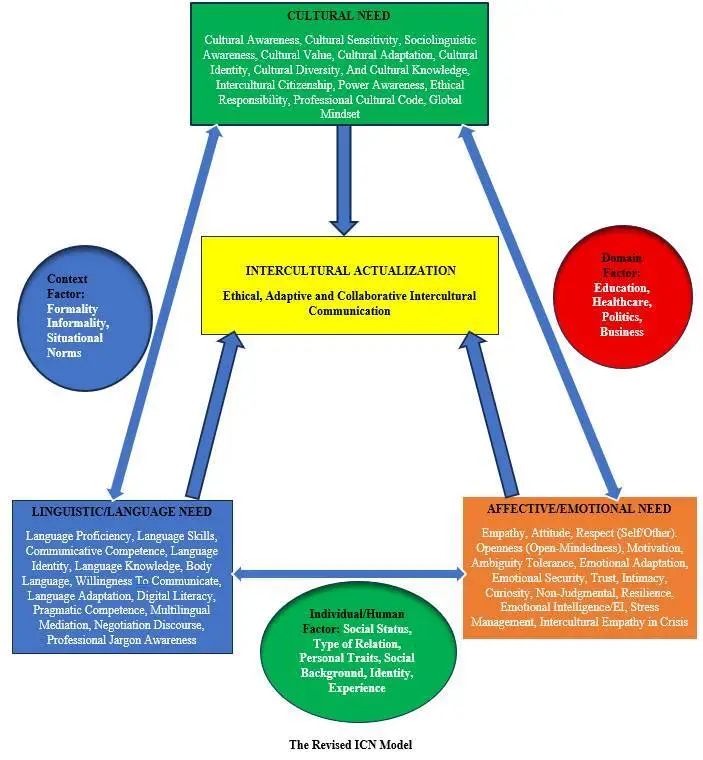
Figure 1. The Revised Intercultural Communication Needs (RICN) Model.
References
Byram, M. (1997). Teaching and assessing intercultural communicative competence. Multilingual Matters.
Deardorff, D. K. (2006). Identification and assessment of intercultural competence as a student outcome of internationalization. Journal of Studies in International Education, 10(3), 241–266. https://doi.org/10.1177/1028315306287002
Ghorbani, V., & Dowlatabadi, H. R. (2024). Investigating the role and position of linguistic needs, affective needs, and cultural needs in intercultural communication: A mixed methods study. Journal of Studies in Applied Language, 7(2), 139–161.
Ghorbani, V., & Dowlatabadi, H. R. (2025). An evolution in intercultural studies: Introducing the Intercultural Communication Needs Model and Triple Needs Theory in English language teaching. Journal of Studies in Applied Language, 8(1), 1–27.
Ghorbani, V., & Hassani, V. (2025). Evolving frameworks of intercultural competence: Toward a more adaptive, responsive, and comprehensive model through a comparative dialogue. Applied Linguistics Compass, 1(3), 1–24. https://doi.org/10.22034/alc.2025.541877.1020
 Vahid Ghorbani, Ph.D., is an applied linguist and intercultural communication researcher whose work focuses on intercultural communication, language education, and teacher development. He is the developer of the Intercultural Communication Needs (ICN) Model and Triple Needs Theory (TNT), with research interests extending to AI integration and innovative approaches in language education. He welcomes international academic and research collaboration.