

The Power of a Three-Hour Lunch in an English Classroom
Noah Long, North American Language Assistance Program, Murcia, Spain
Earlene Gentry, Retired Fulbright Commission, Egypt
Earlene Gentry and I never believed that we would be navigating the complexities of the space-time continuum when we started teaching English as a second language in Egypt and Spain. However, we soon realized that our vastly different experiences shared many cultural, social and economic similarities, which often met at the intersection of space and time.
The similarity we both struggled with at first was adjusting to Egypt and Spain’s laws of time. Since time is the universe’s fourth dimension, Spain and Egypt have bent the rules of time and space around coffee breaks, three-hour lunches, extensive dinners, heat-related naps and calls to prayer. Noah’s first revelation entering this new time continuum occurred when he offered free English tutoring between 3-to-7 p.m. to 25+ high school students, which was countered by the head of the English department saying, “That won’t work because that is during lunch” in front of the class. Earlene’s first encounter with the laws of time at school was her discovery that nearly all of the teachers arrived at school without having eaten breakfast because they expected to have a lengthy and leisurely tea-and-sandwich break during the school day. The janitorial staff was even worse and sometimes even used the teachers’ room for their tea and breakfast, which frequently lasted for an hour or more.
These short days punctuated by long breaks made teaching a challenge. As UNC-Chapel Hill alumni, Earlene and Noah both came from structured educational environments that prioritized classroom efficiency, which made adapting to our new workplaces a mind-bending challenge. Noah often sped through lessons, which were often no more than 20 chaotic minutes wrangling unruly teenagers rather than teaching any measurable English skills. In contrast, Earlene’s career began much earlier at a time when private school students stood when the teacher entered the room and only sat when given permission.
In addition to the bending of the fabric of time, Earlene and I both shared similar experiences regarding English curriculums, teacher turnover and social and economic factors. In Egypt, Earlene discovered that “by the book” teaching was exactly that, which demanded rote memorization from textbooks for students. Having been educated to think, Earlene battled that blind memorization for years. In Spain, Noah’s experience regarding curriculum was more flexible but was combined with the antiquated practice of writing everything down by hand so that books could be reused for following school years. Eventually, Noah stopped counting how many times teachers reverted to chalk and blackboards because computers, Wi-Fi systems and projectors failed in the middle of class in 2025. 35 years earlier, Earlene used a blackboard and chalk in her classroom because it was the only material she had to work with. Earlene and I also witnessed the effects of high teacher turnover. Approximately 20 percent of Spanish public school teachers work on short-term contracts (UNESCO, & International Task Force on Teachers for Education 2030. (2024), p. 60). In Egypt, Earlene found it rare for any English teacher to stay in a position for more than two-to-three years because native-speaking English teachers would often job hop from one school to another for the slightest increase in pay.
It is obvious that Egypt and Spain’s cultures are different. However, Earlene and I have discovered that there are similarities regarding teacher turnover, curriculums and access to materials. Furthermore, both of us contended with the bending of space and time in Mediterranean cultures. Both of us had to adapt our lesson plans, how we taught our students and our expectations. Our academic paths’ crossing has shed light on a series of similarities regarding our work as English teachers and the human condition. We have all heard stories of high teacher turnover in American public schools causing curriculum disruptions or underfunding causing problems with technology. Our anecdotes and experiences show that we still often share similar problems in spite of our age difference, the numerous cultural differences and the complexities of different educational systems around the world. More than anything, we have certainly gained a new appreciation for the power, joy and necessity of a three-hour lunch followed by a leisurely tea break.
Please attend our poster session at TESOL 2026 conference if you are curious how a young teacher in Spain learns from a retired, know-it-all female based in Egypt on Thursday.
References
UNESCO, & International Task Force on Teachers for Education 2030. (2024). Global Report on teachers: Addressing teacher shortfalls and transforming the profession. (Rev. ed.). UNESCO. https://doi.org/10.18356/9789231006555.
 Noah Long is a UNC-Chapel Hill Media & Journalism alumnus and Covenant Scholar. After graduating in 2020, Noah worked in a series of private sector industries while learning Spanish before applying to work in the NALCAP program as a teaching assistant in Spain’s public school system. Noah is currently living in Murcia, Spain, and is working as a teaching assistant at C.E.I.P. Luis Costa and will pursue his CELTA certificate after the end of the school year.
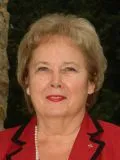 Earlene Gentry, life-long educator, retired from the Fulbright Commission in Egypt but still mentors and volunteers to help teachers in the Egyptian national system. She was a founding member of the SRIS in TESOL international, and has made many presentations as well as being an invited speaker.