
Culture Tree Discussions - Lesson Plans
Melina Jimenez, University of Florida Center for Teaching Excellence, Gainesville, Florida, USA
Context:
This lesson plan has been used at the University of Florida English Language Institute in collaboration with the Department of Linguistics. The ELI students were intermediate to advanced proficiency students in Listening Speaking courses and the Linguistics students were enrolled in Teaching English to Speakers of Other Languages courses. The lesson plan has been successful in achieving the general aim and specific learning objectives below. More than that, both groups of students have reported thoroughly enjoying the discussions with their small group partners, identifying surprising differences or even similarities between their cultures, and that they are better able to understand their classmates and group members as a result.
Lesson General Aim:
The general aim of these discussions is two-fold. For the Intensive English Program students, the goal is to increase intercultural awareness and for the students to become more confident talking about their cultures. For the TESL students, the goal is to heighten their awareness of teaching across proficiency levels, techniques for teaching and lesson planning, and the role of the ESL teacher in group and classroom management.
Learning objectives for IEP students:
- participate in group discussions
- use appropriate conversation skills
- increase intercultural awareness
- summarize and paraphrase information
- use clear question format
Learning objectives for TESL students:
- participate in group discussions with students with a range of language proficiencies
- make connections to the TESL course material
Target audience:
Higher education IEP students and TESL students
Setting:
Face-to-face setting
Materials:
1. Slide deck to explain the concept of the Culture Tree
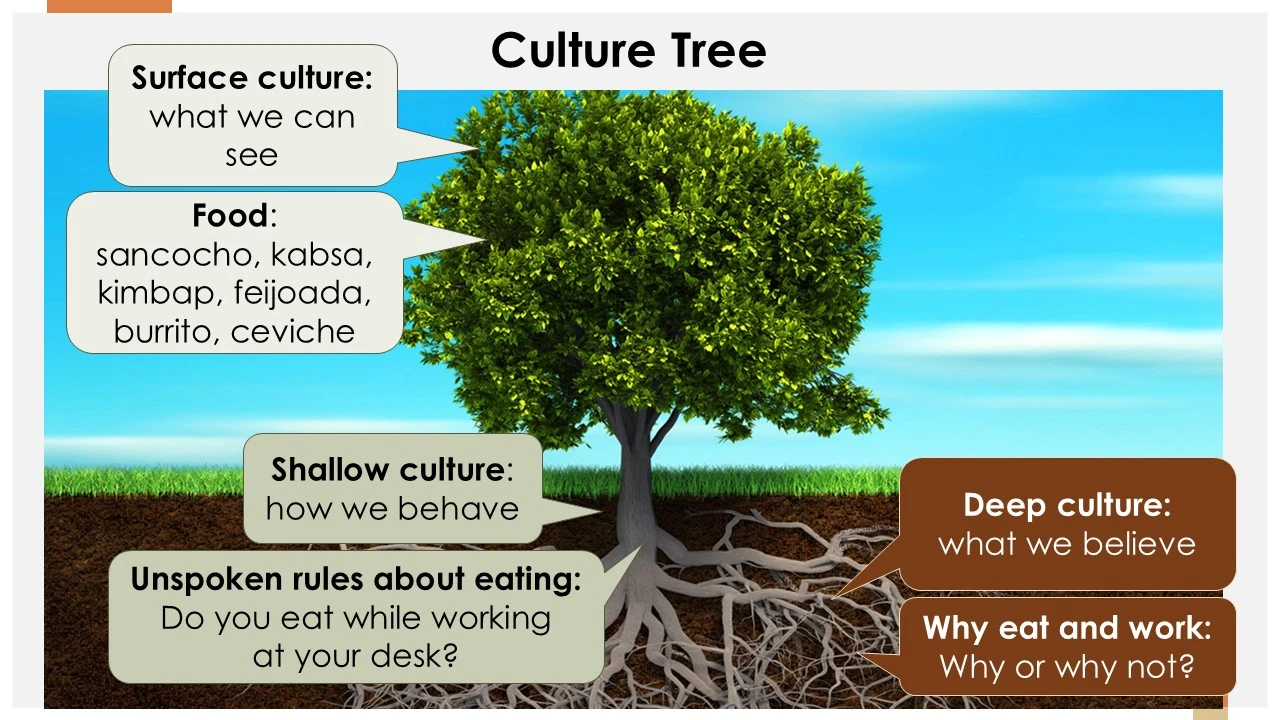
Photo Caption: Culture Tree Image
Sources: https://whyandhowcrt.files.wordpress.com/2019/02/ee.jpg?w=900
https://www.ryecountryday.org/news/post/~board/news/post/middle-school-principal-column-thanksgiving-strengthening-our-roots
https://www.quora.com/What-are-the-cultural-differences-between-the-Midwestern-and-Southern-regions-of-the-United-States
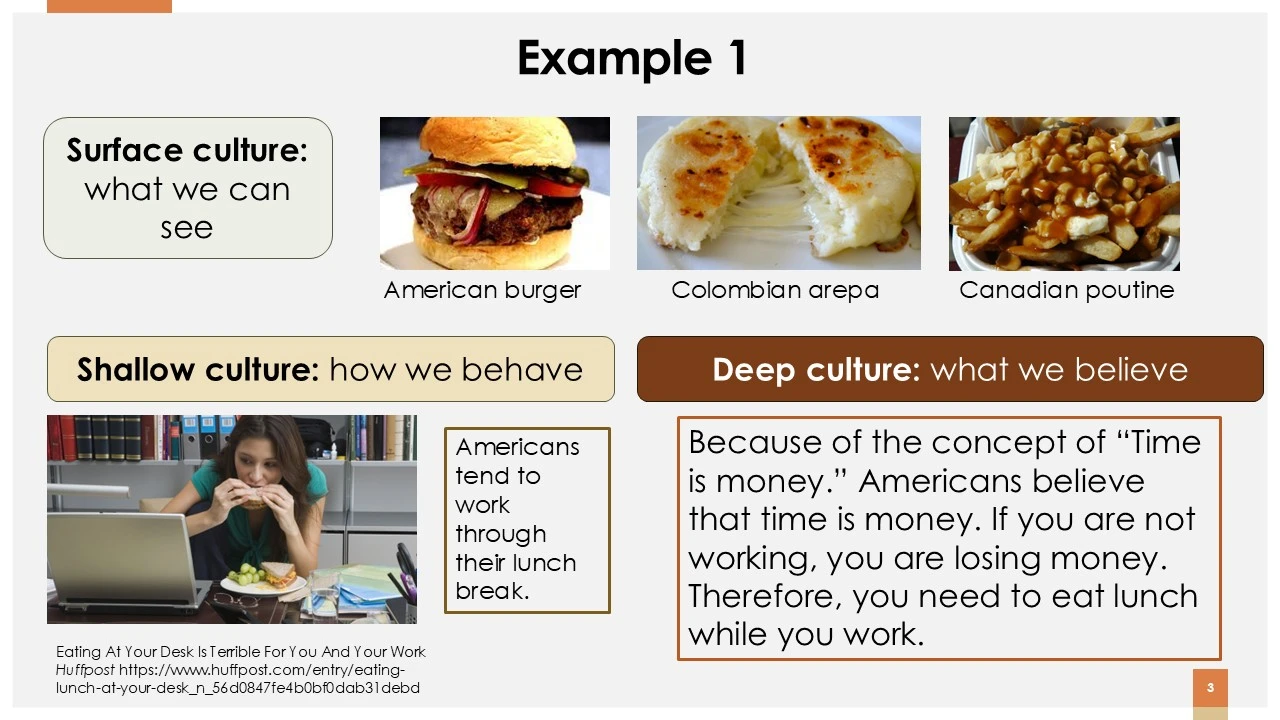
Photo Caption: Culture Tree Discussion Example 1
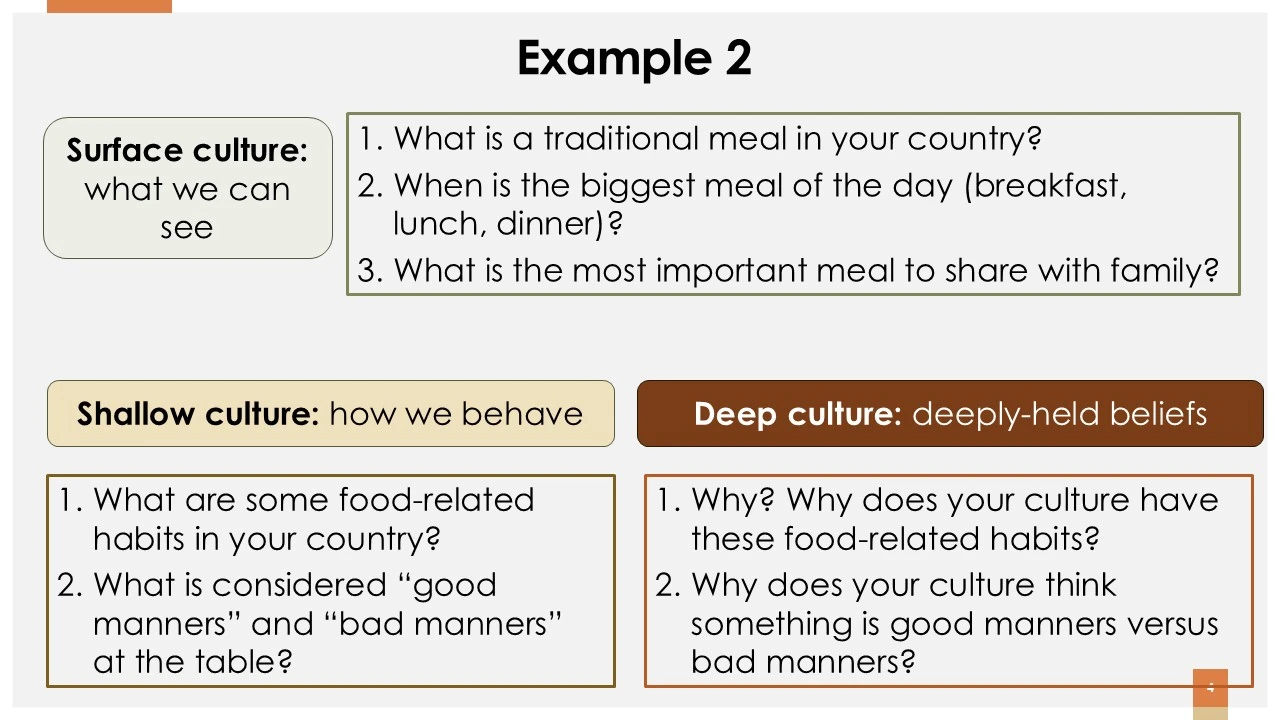
Photo Caption: Culture Tree Discussion Example 2
Sources: https://whyandhowcrt.files.wordpress.com/2019/02/ee.jpg?w=900
https://www.ryecountryday.org/news/post/~board/news/post/middle-school-principal-column-thanksgiving-strengthening-our-roots
https://www.quora.com/What-are-the-cultural-differences-between-the-Midwestern-and-Southern-regions-of-the-United-States
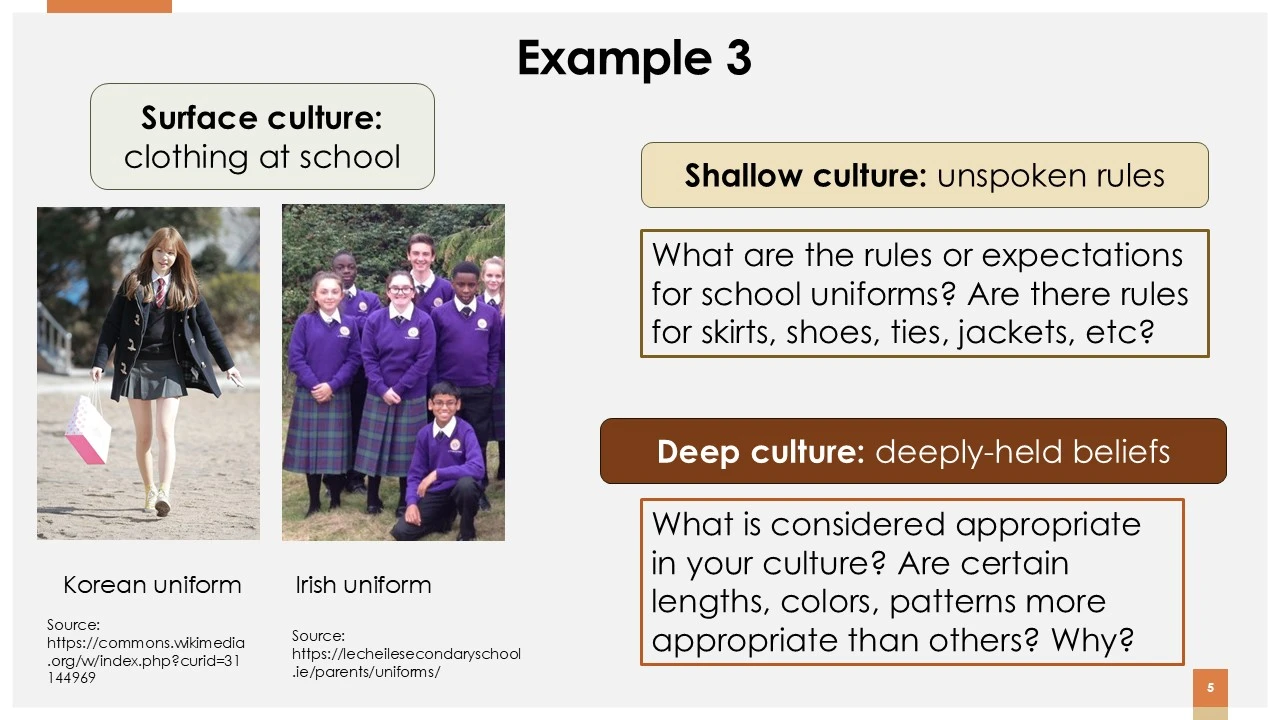
Photo Caption: Culture Tree Discussions Example 3
Sources: https://whyandhowcrt.files.wordpress.com/2019/02/ee.jpg?w=900
https://www.ryecountryday.org/news/post/~board/news/post/middle-school-principal-column-thanksgiving-strengthening-our-roots
https://www.quora.com/What-are-the-cultural-differences-between-the-Midwestern-and-Southern-regions-of-the-United-States
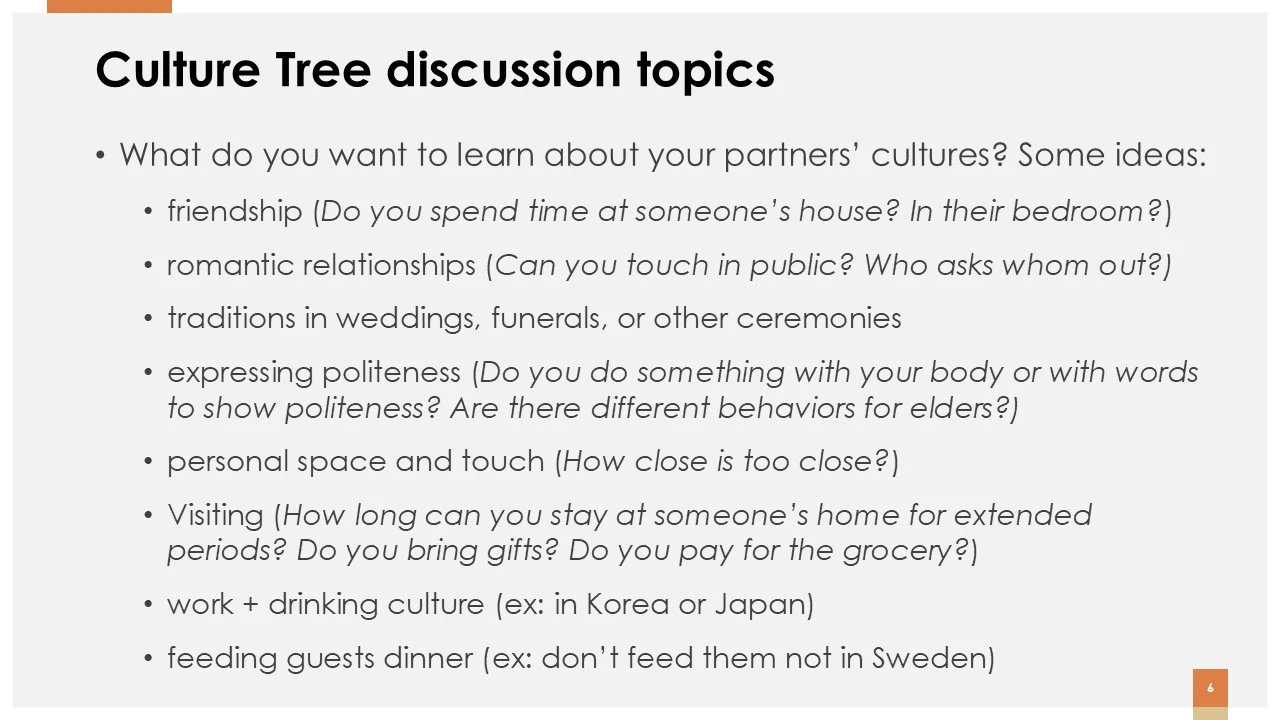
Photo Caption: Culture Tree Discussion Questions
2. Paper or notecards for students to write their questions
Time:
4-5 days total: 1-2 days to prepare the IEP students, 1-2 days for the discussions, 1 day for a debrief
Pre-tasks:
Coordinate with the instructor for TESL course. Early in the semester, choose two days that the TESL students can come to your classroom or a different meeting site.
Tasks to prepare for the discussions:
On the first day of the lesson plan in the IEP course, explain the concept of the Culture Tree. The framework has three levels: surface culture is what we can easily see (the leaves), shallow culture can be seen but is not as salient (the trunk), and deep culture is what we can’t see (the roots). The surface level encompasses arts, music, food, and architecture. The shallow level are unspoken rules that we learn and put into practice but are not generally conscious of. The deep level is the collective unconscious. These are the beliefs, values, and norms that the members of the society mostly share.
Divide the IEP students into groups of 3 with different language and cultural backgrounds and ask them questions to get them thinking about the different levels of culture. Refer to the slide deck for examples and more topics.
Have the students choose shallow (not surface) cultural topics to discuss such as politeness, personal space, feeding guests, or traditions in weddings or funerals. Then have the students talk about the things they want to learn about their international classmates and the domestic students who will visit.
Have the students write down questions. Sometimes their questions won’t get to the topic they’re really interested in, so I like to ask, “How would you answer this question?” This helps identify their curiosity and hone in on their question to help them modify the grammar.
Discussion day tasks:
Have 1-2 TESL students join the IEP groups, depending on the size of the classes and the groups. Groups of 4 (3 IEP students and 1 TESL students) is ideal. Very briefly explain the Culture Tree framework for the benefit of the TESL students, but allow most of the class to be for the discussions. Encourage the IEP students to take notes for the debrief day.
Post-tasks:
On the debrief day, put the IEP students in different groups from their TESL discussion groups and ask them to share what they learned with their new partners. If time allows, set up the chairs in a big circle, which gives the students a chance to share about their own culture in a bigger group setting but it also gives them a chance to learn about each other and to see different viewpoints that they might not have encountered in their small groups.
Following their visit with the IEP classes, the TESL students write a short report, wherein they share a brief description of the group of IEP students they talked with (e.g., the students’ cultural backgrounds and native languages), what the topics of discussion were (e.g., marriage, manners, etc.), and a personal reflection of the experience. The personal reflection of the experience in this report should connect back to introductory TESL course material.
Final comments:
At the end of each semester, I ask the IEP students what their favorite or most useful activity was, and they highlight this as one of their favorite activities because they learn so much from their ELI classmates and from their TESL partners. In addition, the collaboration between the ELI and the Department of Linguistics has created a unique opportunity for language learners to engage in meaningful cultural exchanges and for the TESL students to observe and reflect on teaching practices.
References
Hall, E. T. (1976). Beyond Culture. Anchor Books
Hammond, Z.. (2014). Culturally Responsive Teaching & the Brain. Corwin
Song, R. (2020). Middle School Principle Column: Thanksgiving, Strengthening Our Roots. https://www.ryecountryday.org/news/post/~board/news/post/middle-school-principal-column-thanksgiving-strengthening-our-roots
What are the Cultural Differences Between the Midwestern and Southern Regions of the United States. Quora. From https://www.quora.com/What-are-the-cultural-differences-between-the-Midwestern-and-Southern-regions-of-the-United-States
 Melina Jimenez serves as an Instructional Assessment Coordinator at the UF Center for Teaching Excellence. Previously, she taught at the UF English Language Institute for 19 years. Melina regularly teaches one-credit discussion courses for the UF Honors Program.