
Welcome to Jumanji: An Anti-Deficit Research Adventure Centered on Multilingual Learners
Sana Sayed, University of California, San Diego, California, USA
1. Activity Rationale
Target Audience: Students enrolled in FYW (First-Year Writing).
Writing Focus: Collaborative research with an emphasis on locating multilingual and multimodal sources.
Levels for Activity: The assignment can be adapted to any institutional context where the foundational skills of locating different types of sources are taught for a writing class.
Pedagogical Rationale: The goal of this collaborative research assignment is for students to locate and share sources with their peers across multiple languages and modalities. The assignment builds information literacy skills, encourages peer collaboration, and recognizes the linguistic and cultural knowledge that multilingual learners bring to the writing classroom.
Canagarajah (2013) argues in favor of translingual practice so that students draw from their full linguistic abilities while learning. Agreeing with several decades of scholarship (Valencia & Solórzano, 1997; Matsuda, 2006; Canagarajah, 2007, 2013; Lippi-Green, 2012; Valencia, 2020), Stojanović (2021) explains how the deficit approach is still prevalent in language learning education because the assumption is that ‘different’ means deficit, whereas educators must consider linguistic differences and diversities as benefits (p. 63). With subtractive or deficit models, the belief is that students must lose their individual linguistic practices to acquire and advance in standard English proficiency.
This assignment counters deficit thinking by positioning multilingual learners’ rich linguistic resources as assets and demonstrating how culturally responsive pedagogy can be integrated at all levels of learning. Since multilingual writers constitute a significant portion of the contemporary university population, they must be supported through inclusive, asset-based pedagogies.
Mini Pedagogical Rationale for Each Step of the Activity:
- In Step 1, students assign themselves one of three roles (Investigator, Social Analyst, or Multimedia Explorer). By self-selecting, they are empowered to leverage their individual strengths by choosing the mode of inquiry that they feel the most comfortable with (textual, social, and multimodal). Also, research becomes a collaborative endeavor rather than an individualized task.
-
Step 2 promotes metacognitive awareness as students share their topics with their peers and begin to see how their interests connect to larger global and cultural issues.
- The purpose of Step 3 is for students to practice information literacy skills and linguistic inclusivity by searching for sources across multimodal and multilingual platforms to better understand how diverse perspectives shape scholarly and social conversations.
- In Step 4, students engage in critical dialogue and peer learning to explore how language, modality, and perspective shape knowledge construction in a collaborative setting.
- The purpose of Step 5 is for students to critically engage with source credibility and relevance through a low-stakes, playful, and communal process.
- Students translate their research process into a practical, usable outcome in Step 6 when they create reference entries for the sources they located. By practicing how to cite multimodal and multilingual sources, students gain a deeper understanding of how all types of knowledge are an important part of scholarly dialogue. Combined, all steps of the activity promote an anti-deficit stance to learning by positioning multilingualism, collaboration, and metacognitive information literacy practices as central to students’ learning across multilingual and multimodal contexts.
2. The Activity
Welcome to Jumanji, The Research Adventure!

Directions: You will work in teams of 3. Each of you will take on one role to guide your very exciting journey in…locating sources! For this specific adventure, you are encouraged to locate non-English sources to understand how multilingual knowledge advances your research adventure. Each team member should respond in a different color font.
Step 1 (2-3 minutes): Choose a role!
 The Investigator: This person will find hidden gems in scholarly articles. Try navigating databases in English and/or other languages.
 The Social Analyst: This person enjoys learning about how topics are covered in news, social media, or interviews. Try locating multilingual sources to see how coverage varies across languages.
 The Multimedia Explorer: This person doesn’t just like to read. They immerse themselves in multimedia content such as videos, podcasts, and/or infographics that appeal to all senses. You are encouraged to locate non-English sources with subtitles.
Step 2 (3-5 minutes): What are we even exploring? Write each team member’s name and research topic below.
Step 3 (15-20 minutes): Finding Sources
Each person will locate 3 sources, one for each team member’s topic. Think about perspectives that sources from your home language bring to deepen your research. If your source is not in English, summarize its key ideas for your team member.
❖ If you are The Investigator, you will enter the library labyrinth. Use the institutional library database to find one journal article related to each team member’s topic listed above. The source can’t be more than five years old. Copy/paste the source link below for each topic.
❖ If you are The Social Analyst, scour news articles, magazines, and social media to find one source for each team member’s topic. Copy/paste the link below, and then go on a fact-checking mission. Is there author credibility/ethos? Do you know when this source was published?
❖ If you are The Multimedia Explorer, you will go on a media mission. Search TED Talks, YouTube, interviews, or podcasts to find one source for each team member’s topic. Copy/paste the link below, and summarize the main idea of the TED Talk, YouTube video, interview, or podcast in no more than 1-3 sentences.
Step 4 (15-20 minutes): Source Speed Dating
Now that you’ve found three sources, share them with your team members. Each person should spend 1-2 minutes summarizing what the source is about, explaining why it’s credible, and describing how it could be useful. After each source is shared, the other team members will ask one thoughtful question that further explores the source’s credibility, language, or perspective. Continue until everyone has shared all of their located sources.
Step 5 (3-5 minutes): Source Showdown
Overall, who located the best sources in your team? This could be the most surprising, most useful, and/or most engaging.
Step 6 (10 minutes): The Reference Dance

Now, choreograph (create) an APA reference entry for each of the three sources you found. Practice how to cite non-English sources. Remember, this is a very technical process. Precision is key; one misstep, and your citation stumbles out of rhythm! Once done, be a good dance partner and share it with your peers!
References
Canagarajah, S. (2007). Lingua franca English, multilingual communities, and language acquisition. The Modern Language Journal, 91, 923–939. https://www.jstor.org/stable/4626141
Canagarajah, S. (2013). Translingual practice: Global Englishes and cosmopolitan relations. Routledge. https://doi.org/10.4324/9780203073889
Lippi-Green, R. (2012). English with an accent: Language, ideology, and discrimination in the United States (2nd ed.). Routledge. https://doi.org/10.4324/9780203348802
Matsuda, P. K. (2006). The myth of linguistic homogeneity in U.S. college composition. College English, 68(6), 637–651. https://www.jstor.org/stable/25472180
Stojanović, M. (2021). Are we multilingual yet? A 21st-century approach to understanding multilingual literacy skills. In P.A. Robinson, K.V. Williams, & M. Stojanović (Eds.), Global citizenship for adult education advancing critical literacies for equity and social justice (pp. 63-71). Routledge. https://doi.org/10.4324/9781003050421
Valencia, R. R. & Solórzano, D. G. (1997). Contemporary deficit thinking. In R. R. Valencia (Ed.), The evolution of deficit thinking: Educational thought and practice (pp. 160-210). Routledge. https://doi-org.proxy.lib.odu.edu/10.4324/9780203046586
Valencia, R. R. (2020). International deficit thinking: Educational thought and practice. Routledge. https://doi.org/10.4324/9780367855581
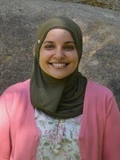 Sana Sayed is a Lecturer in the Warren College Writing Program at the University of California, San Diego (UCSD). Before joining UCSD, she taught for 16 years in the English Department at the American University of Sharjah (AUS) in the United Arab Emirates. Her research interests include assessment, accountability, digital literacies, and equitable pedagogical practices for multilingual learners in higher education.