
Letter from the Editors
Stefan M. Vogel, University at Albany, SUNY, USA
Bakheet S. Almatrafi, Umm Al-Qura University, Saudi Arabia
Ryan J. Good, Association of International Cultural and Educational Exchange, Taiwan
Dear SLWIS members,
We are very excited to share the fall issue of SLW News!
The issue features a letter from our SLWIS chair, Andy Liu, which provides updates on current IS leadership as well as our past SLWIS activities and accomplishments, including our fall webinar and book club. Andy also introduces the “Inaugural Second Language Writing Interest Section Symposium for Aspiring Scholars” and shares our plans for the TESOL 2026 Convention & Expo in Salt Lake City in March, including our Academic Session and our Intersection Session with the Applied Linguistics Interest Section.
In the Technology-Enhanced Language Learning section, Jung-Hsien Lin (University of California, Irvine) explores how virtual reality (VR) supports multilingual and intercultural writing through two pedagogical contexts at the University of California, Irvine. By integrating immersive reflection and collaborative design, her work illustrates how VR fosters digital storytelling, translanguaging, and multimodal composition, reframing TESOL writing as an embodied and inclusive practice.
In the Advice From Practitioners section, Sana Sayed (University of California, San Diego) shares a low-stakes, collaborative research activity designed to help multilingual learners locate sources across different modalities and languages. The purpose of the assignment is to support multilingual learners’ research and information literacy skills through anti-deficit, culturally responsive pedagogy.
In the Bridging Research and Pedagogy section, Madeline Crozier Sutton (Duke University) reviews the “Disciplinary Dialogues” section on ungrading published in the December 2024 issue of the Journal of Second Language Writing. Advocating for alternative assessment approaches like ungrading, contract grading, and learning-oriented feedback, the discussion encourages instructors to use student-centered practices that align with sound principles in SLW pedagogy.
In the Research Brief section, Johanathan Woodworth (Mount Saint Vincent University) reports on a study examining how teachers conceptualise the integration of generative artificial intelligence (GenAI) into second language writing assessment. Drawing on professional development workshops, survey data, and structured reflections, findings show growth in AI literacy, shifts in rubric design, heightened attention to student voice, and increased awareness of equity and accessibility in multilingual writing contexts.
In our Meet the Experts interview, Umida Hakimova (University of Warwick) shares her professional and academic journey as a TESOL member, including her shift from teacher-centered teaching to adopting a “view [of] language education as a space for students to improve their language skills through collaboration and agency.” She reflects on TESOL in Uzbekistan and discusses the growing interest in teaching writing in this context. Based on her own research about EFL textbooks’ approach to teaching writing, she concludes that writing must be understood more as a “space for reflection or communication” rather than a tacit skill or “exam requirement.” The second half of the interview focuses on her doctoral research creating TBLT materials for primary-level instruction, gives valuable and creative tips on how to improve SLW instruction, and provides colleagues who are SLW writers with suggestions on how to strengthen their writing skills.
Finally, we have searched the 2026 TESOL Convention program for “writing-focused” sessions and saved the search results as a PDF. We hope this will make your conference experience more convenient! You can also check out the live program on the conference website.
We hope you enjoy reading the wonderful submissions to the issue and will consider contributing to the SLW community with your practitioner and/or research experiences in the future.
Warm regards,
Stefan Vogel
Bahkeet S. Almatrafi
Ryan Good
 Stefan M. Vogel is a Lecturer at the University at Albany, SUNY, where he teaches in the Writing and Critical Inquiry program. He holds a PhD in Second Language Acquisition and Teaching from the University of Arizona. His primary areas of specialization are in second language writing, L2 teacher education, and program administration and leadership.
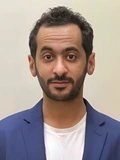 Bakheet S. Almatrafi holds a PhD in Applied Linguistics from the University of Memphis, USA. He currently teaches at Umm Al-Qura University in Saudi Arabia. His research centers around L2 writing, multilingualism and language ideology.
 Ryan J. Good is a TEACH Fellow with the Association of International Cultural and Educational Exchange in Taiwan. He holds a Master’s in TESOL from the University of Maryland, Baltimore County, and a preK-12 TESOL licensure from the State of Maryland. He has spent the last 15 years teaching English abroad in Indonesia, Uzbekistan, and Taiwan.